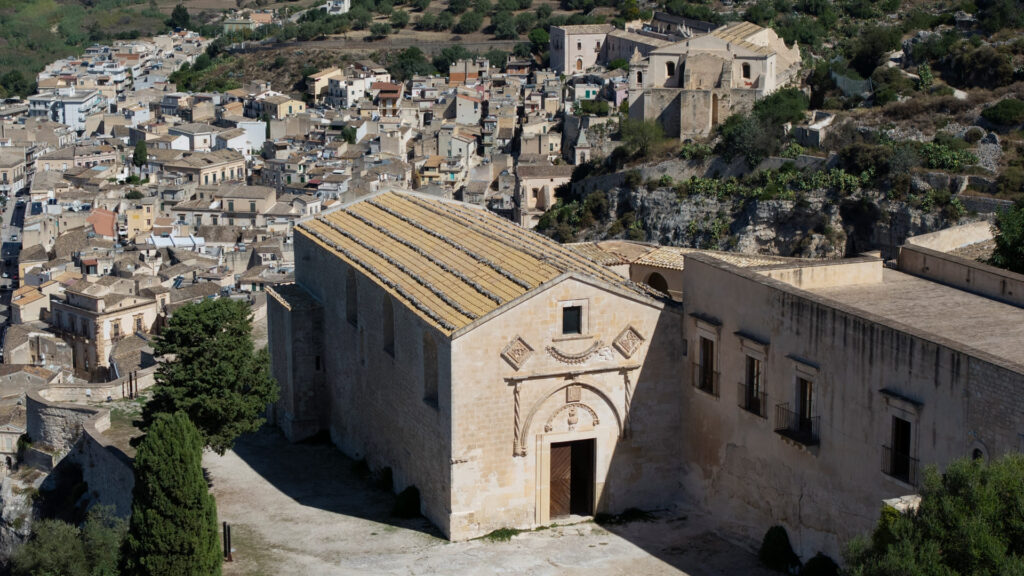
Church and Convent of Santa Maria della Croce

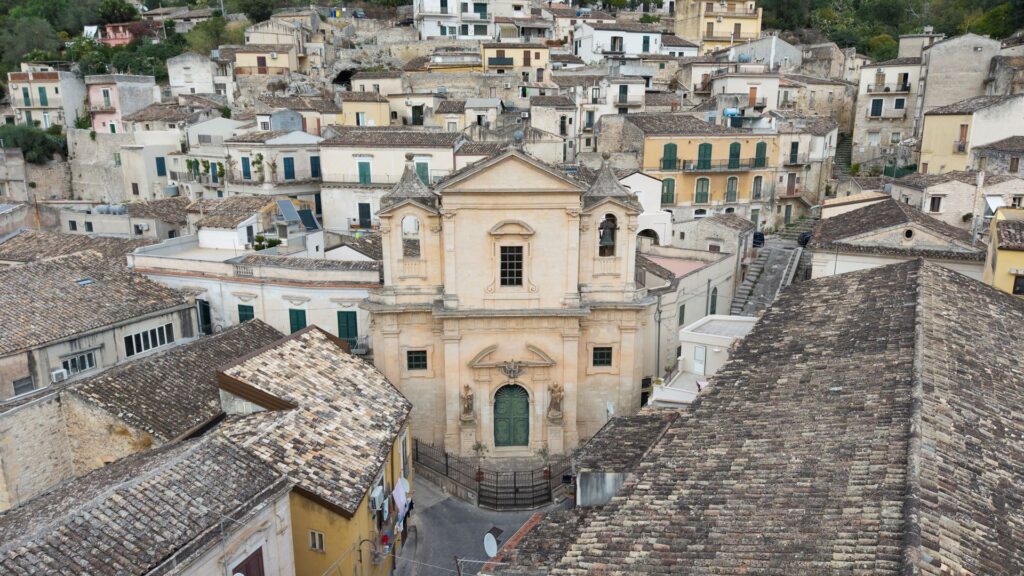
The Church and Convent of Santa Maria della Croce stand atop the hill of the same name—known as the “Hill of the Cross”—in the heart of Scicli’s historic center. The complex likely dates back to the late 15th or early 16th century, as suggested by the inscription “1528” found on a decorative element on the side. Over the centuries, the site has undergone several transformations that shaped its Renaissance and Baroque appearance, especially following the damage caused by the 1693 earthquake. The complex includes a single-nave church and a convent featuring a distinctive inner cloister, historically associated with the religious order of the Crociferi. The richly decorated interiors contain frescoes, stuccoes, and sacred artworks of great artistic and spiritual value, making this site a significant religious, cultural, and historical landmark for the city of Scicli and its people.
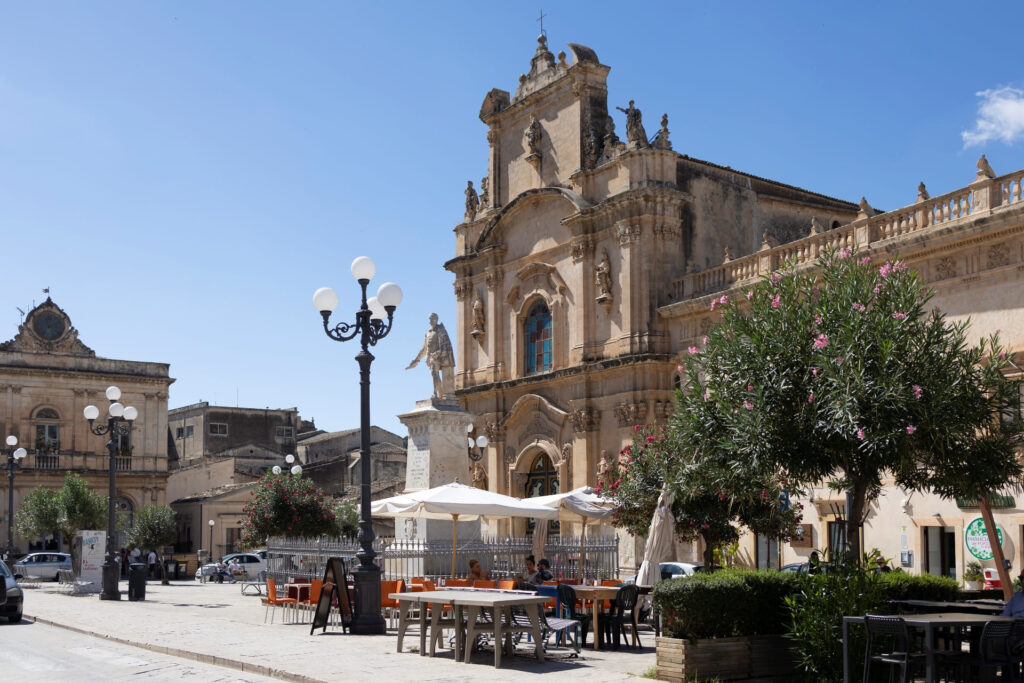
Busacca Square

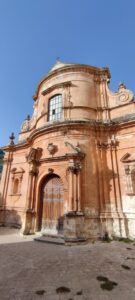
Busacca Square, located in the heart of Scicli, is one of the city’s most significant urban spaces, a crossroads of history, art, and everyday life. The square took on its current urban layout at the end of the 19th century, when in 1884 the monument to Pietro Di Lorenzo Busacca, a wealthy benefactor from Scicli, was placed there. Historic buildings surround the square, including the Church of the Carmine, built after the 1693 earthquake. The ogival portal and Gothic rose window are among the original elements that survived the quake, bearing witness to medieval architecture. The adjacent former Carmelite convent, now home to the municipal library, further enhances the cultural value of the site. Today, Piazza Busacca is a vibrant and lively space, hosting both civic and religious events, and remains a key meeting point for locals and tourists wishing to immerse themselves in the historical and social identity of the city.

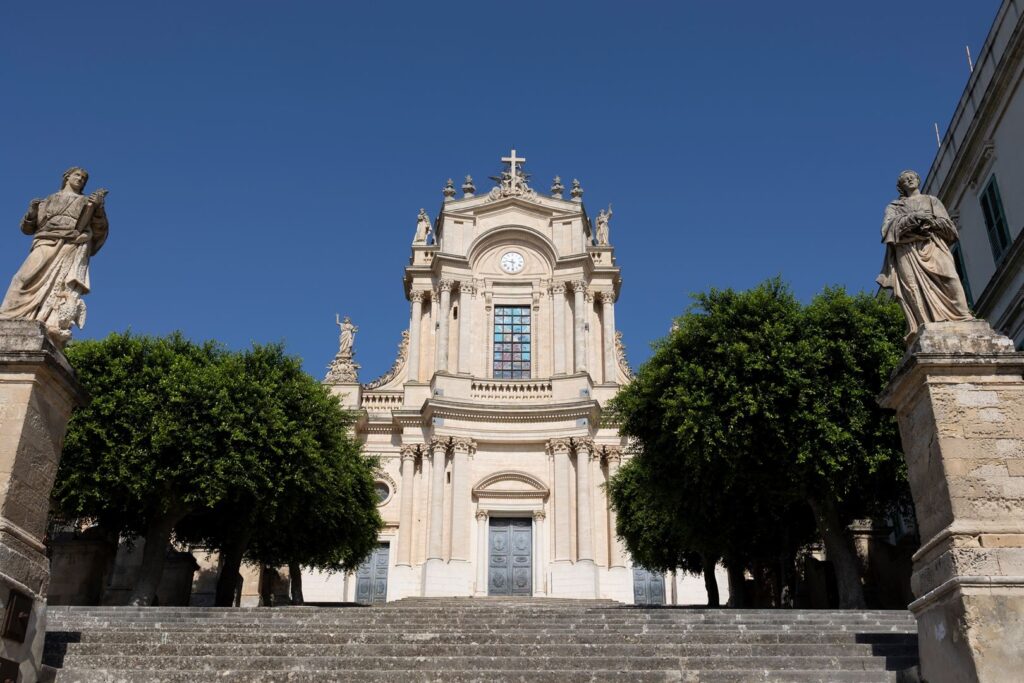
Church of San Giovanni evangelist

The Church of San Giovanni Evangelista, located in Piazza San Giovanni in Modica Alta, is one of the most important examples of post-earthquake Modican Baroque. Rebuilt in the 18th century on an earlier medieval church, it is distinguished by its façade articulated on three orders with niches and columns, flanked by a bell tower. Access is via a scenic staircase that also leads to a large panoramic belvedere. The interior, with a single nave, preserves a rich artistic heritage: a marble high altar, gilded stuccoes, wooden statues and 18th-century paintings. The decorated wooden ceiling completes the atmosphere of solemnity and recollection. The church is a symbol of the religious and artistic rebirth after the 1693 earthquake and a spiritual reference point for Modica Alta.

The Monumental Complex of San Domenico

The Monumental Complex of San Domenico, located on Corso Umberto I in Modica, was founded in 1461 by the Dominican friars, soon assuming a central role as the spiritual and cultural hub of the city. The complex comprises the church and the convent, both characterised by a sober but historically rich architecture. The church façade is simple and elegant, while the single-nave interior is enriched by side altars, Baroque decorations and precious sacred works that bear witness to Modica’s artistic and religious tradition. The convent, although partially remodelled over time, preserves important remains of the cloister and rooms of great historical value. After the devastating earthquake of 1693, the complex was carefully restored and continues to be a point of reference for the local community. Today it hosts religious services, cultural events and manifestations, keeping alive the link between history, art and spirituality.

The Basilica Santuario Madonna delle Grazie

The Basilica Santuario Madonna delle Grazie, located on Via Mercè in the Modica Bassa district, is one of the most important and venerated Marian places of worship in the city. Its construction began in the 17th century and was enlarged and enriched over the following centuries, becoming a spiritual reference point for the local community. Inside, a precious wooden statue of the Madonna delle Grazie, also dating back to the 17th century, is kept, an object of deep popular devotion. The basilica’s façade is sober and elegant, while the interior, divided into three naves with side chapels, is dominated by a large central dome that illuminates the sacred space. Every year, the basilica welcomes numerous pilgrims and faithful during religious festivities, with a heartfelt participation that strengthens the bond between tradition, faith and the city’s cultural identity. The Madonna delle Grazie thus remains a living symbol of Modican spirituality.

The Church of San Paolo

The Church of San Paolo, located on Via Lavinaro in the heart of Modica Bassa, is a small but significant building of worship with ancient roots, remodelled during the 17th and 18th centuries. The façade, simple and made of local stone, reflects the humility and secondary church function it has always had in the urban context. The interior, with a single hall, houses a stone high altar and some essential liturgical furnishings, evidence of religious life in the past. Although today it is little visited and rarely open to the public, the church maintains a deep bond with the popular neighbourhood that surrounds it, representing a spiritual reference point for the local community. More than its artistic value, the church’s value lies in the collective memory and religious tradition of authentic Modica, making it a small treasure chest of popular history.

Church of San Nicola

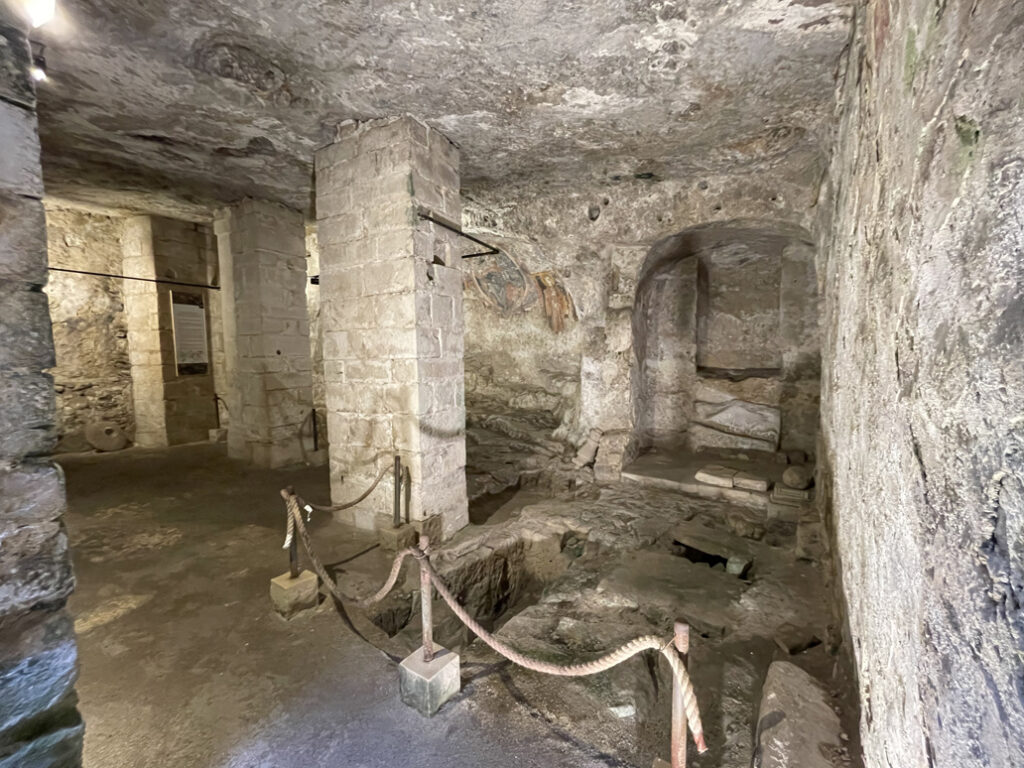
The church of San Nicola, located in the picturesque Cava Ispica in Modica, is one of the most fascinating and ancient examples of religious rock architecture in the Hyblean territory. Excavated entirely in the rock between the 6th and 9th centuries, this small church presents a simple but significant structure, with a semicircular apse and several votive niches that testify to the intense devotion of the faithful at the time. The interior, essential and cosy, preserves traces of Byzantine frescoes that tell the religious and artistic history of the place. Set in a natural and archaeological context of great value, the church is no longer officiated at but remains a precious spiritual and cultural legacy, a symbol of the spread of Christianity in the rural areas of Modica and a living testimony to the historical roots of the territory.

The Church of Santa Maria del Soccorso

The Church of Santa Maria del Soccorso, located in Corso Umberto I in Modica Bassa, is a precious testimony to the town’s religious and architectural history. With ancient origins, it was rebuilt in Baroque style after the devastating earthquake of 1693, which deeply marked the area. The building is characterised by a sober but elegant façade, made of local stone, with a finely decorated Baroque portal and a bell gable tower that rises discreetly above the urban skyline. Inside, the single nave is enriched with refined stuccoes and side altars that testify to the devotion and sacred art of Modica. Among the most important works is the wooden statue of Our Lady of Succour, an object of deep veneration by the local population. Even today, the church plays an active role in the religious life of the city, representing a significant presence and a landmark along the main axis of Modica’s historical centre.

San Giovanni Square and San Giovanni Cathedral

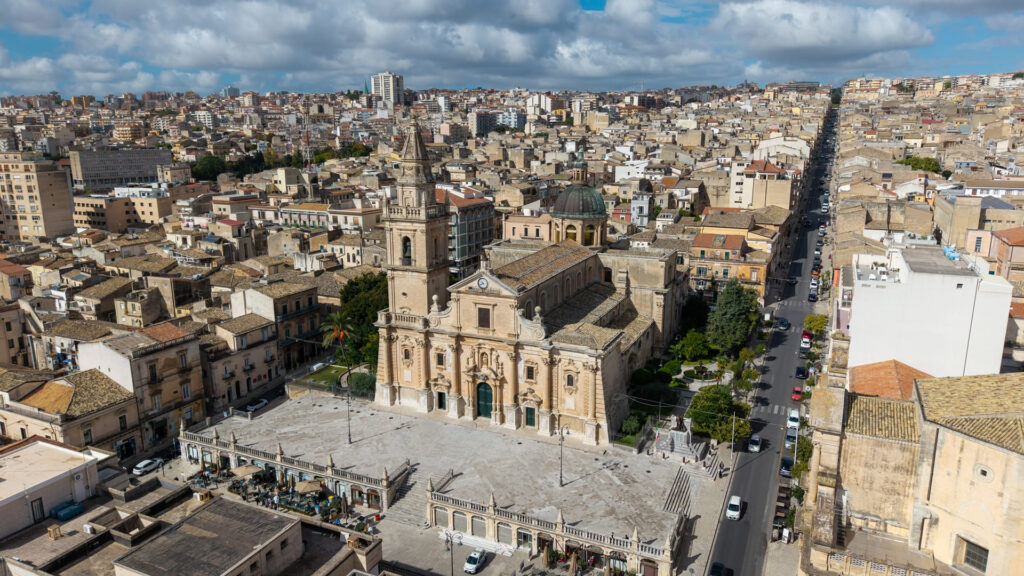
Square San Giovanni is one of Ragusa’s main public spaces and is the beating heart of the city’s social, religious and cultural life. Large and scenic, the square is dominated by the majestic Cathedral of St John the Baptist, the city’s patron saint, built in the 18th century after the 1693 earthquake. The cathedral is distinguished by its imposing Baroque façade, decorated with sculptures, pilasters and stuccoes that testify to the high level of artistry of the time. The three-nave interior is embellished with monumental altars, important paintings and an 18th-century organ of great historical value. Piazza San Giovanni has always been the site of important religious celebrations, solemn processions, cultural events and concerts, becoming not only a spiritual but also a community reference point for the citizens of Ragusa. A symbol of identity, it is an essential stop for anyone visiting the city.

The Church of Santa Maria dell’Itria

The Church of Santa Maria dell’Itria in Ragusa, founded in the 14th century, is a significant example of religious architecture that harmoniously blends Gothic, Renaissance and Baroque elements, reflecting the different historical periods that marked the area. The sober but elegant façade leads to a richly decorated interior, with refined stuccoes and Baroque frescoes of great artistic value, which lend the room an evocative and solemn atmosphere. The church houses numerous works of sacred art from various periods, testimony to the cultural and spiritual richness of the local community. It is the seat of the Confraternity of the Itria, an institution that preserves ancient religious traditions that are still alive and popular. Open to both the faithful and tourists, the church also hosts cultural and religious events that enhance and promote Ragusa’s precious historical and artistic heritage, representing a spiritual and cultural reference point for the city.