Square Duomo and the Church of San Giorgio

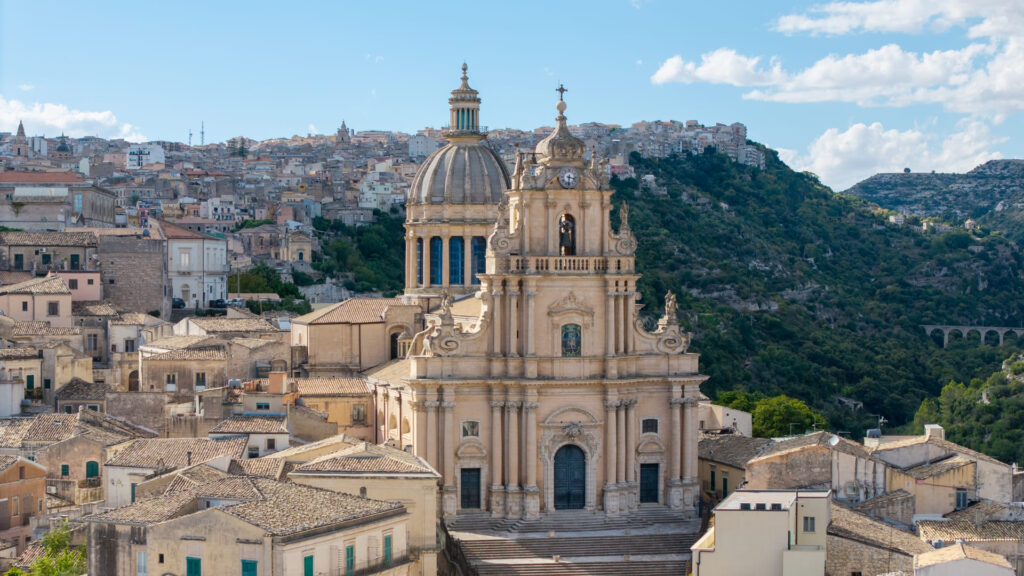
Squadre Duomo is the beating heart of Ragusa Ibla, framed by the majestic Church of San Giorgio, an authentic masterpiece of Sicilian Baroque built between 1739 and 1775. This church is distinguished by its imposing three-order façade, richly decorated with Corinthian columns, niches and statues reflecting the city’s deep religious and artistic tradition. The interior, finely decorated with elaborate stucco work and frescoes of great historical and artistic value, creates a solemn and evocative atmosphere. The monumental staircase that connects Piazza Duomo to the area below constitutes a scenic route of great visual impact, making the complex an essential reference point for believers, tourists and art and culture enthusiasts. Piazza Duomo is undoubtedly one of the most representative and best-loved symbols of Ragusa Ibla, a hub of religious and cultural events that animate the city’s historic heart.
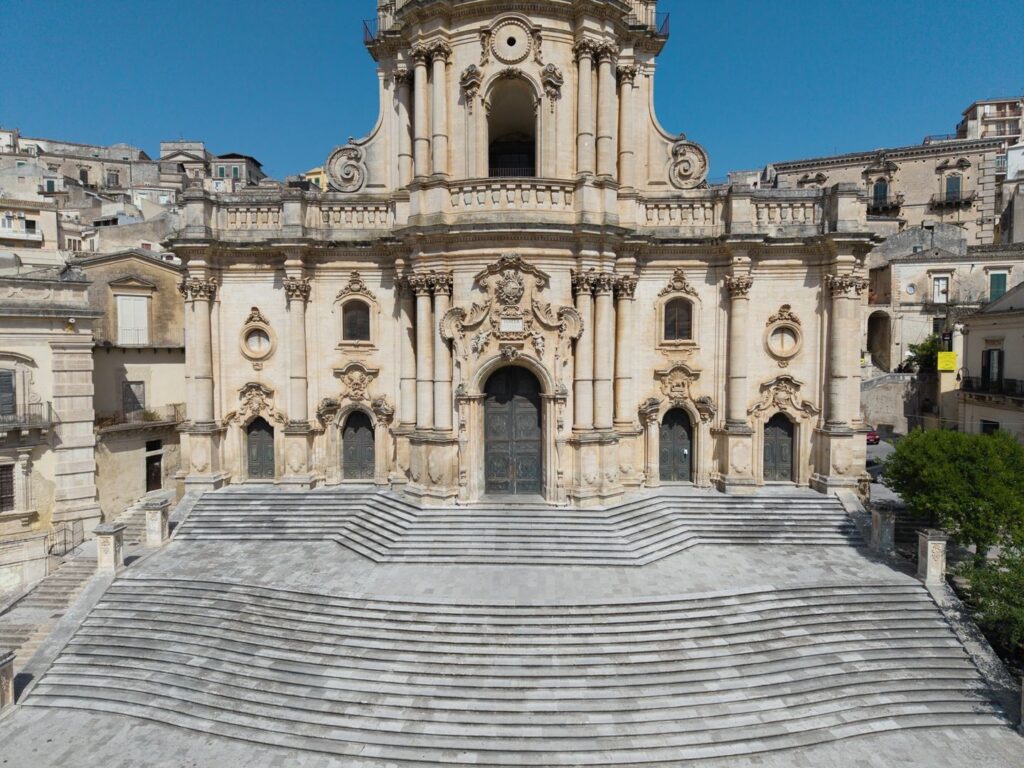
Duomo di San Giorgio

The Cathedral of San Giorgio is Modica’s most majestic monument and one of the masterpieces of Sicilian Baroque. It was built over medieval buildings after the arrival of Ruggero d’Altavilla and, rebuilt several times after major earthquakes (1542, 1613, 1693), took on its current appearance between the 18th and 19th centuries. Architectural masterpieces such as the scenic staircase (up to 260 steps) and the 62 m high tower-facade emphasise its theatricality. Inside, a Latin-cross layout with 22 Corinthian columns, stucco work, frescoes, a monumental organ and works by Bernardino Nigro, Paladini, Cane and sculptors from Gagini create an impressive artistic itinerary. The floor sundial from 1895 and the “Santa Cassa” increase the cultural and historical value. A place of faith and identity, every year it is the scene of solemn processions, in particular that of St George, the city’s patron saint. A UNESCO World Heritage Site, it is an essential stop for anyone visiting Modica who wants to immerse themselves in the splendour of the Eastern Baroque.

Church of Santa Maria delle Scale

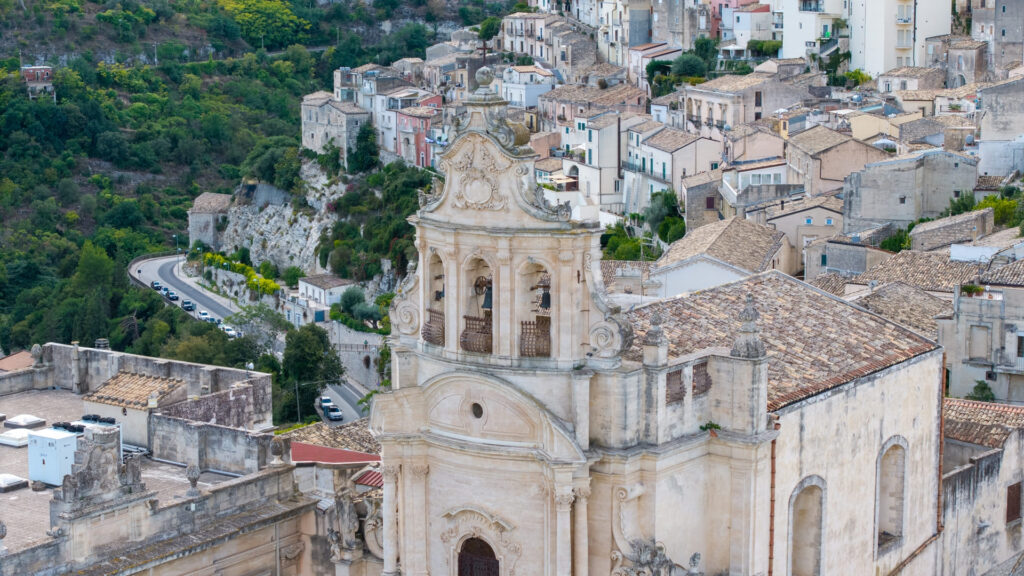
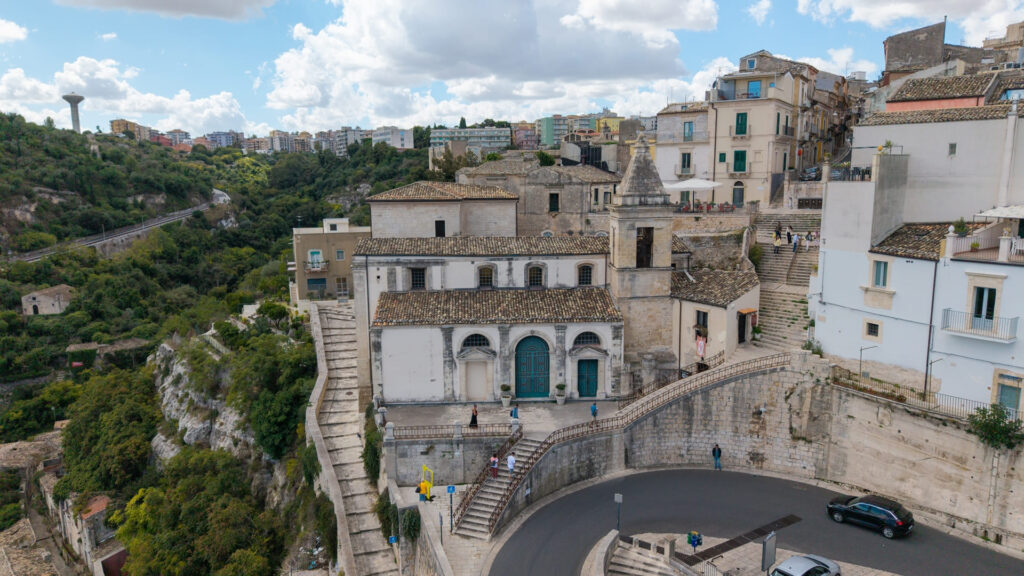
Located along the picturesque Discesa Santa Maria, which connects Ragusa Superiore to Ibla, the Church of Santa Maria delle Scale is one of the city’s oldest sacred places. Founded in the 14th century by Cistercian monks, it was enlarged and partially rebuilt after the 1693 earthquake, integrating Baroque elements with the original Gothic-Catalan structures. Evidence of this is the ogival portal, which has survived the centuries and leads to an interior with asymmetrical naves, enriched with stone decorations and valuable altars. The church is also famous for its privileged panoramic position: from the churchyard there is a spectacular view of Ragusa Ibla, with its roofs, churches and the surrounding green valley. A place of worship and contemplation, it is today one of the most popular destinations for the faithful, art lovers and tourists, for its architectural beauty and the strong symbolic value that links the two souls of the city.

The Church of Santa Maria del Gesù

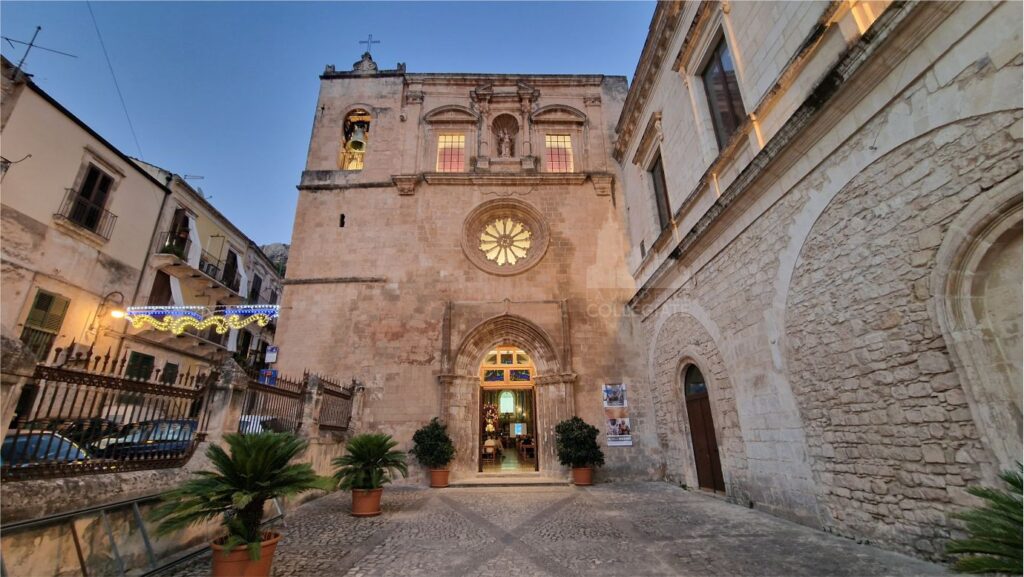
The Church of Santa Maria del Gesù, located in Modica Alta, was built between 1478 and 1481 as part of a Franciscan complex that also included the convent, completed by 1520. It is one of the most important and best-preserved examples of late Gothic architecture in Sicily. The church features an elegant Gothic-Catalan portal, a precious rose window pierced in stone and 16th-century frescoes decorating the interior walls. The adjoining cloister, with its harmonious colonnade and central well, recalls the ancient monastic spirit and offers a place for calm and reflection. A rare example of a building that survived the 1693 earthquake without serious damage, it has undergone careful restoration after decades of neglect. Today the church hosts cultural events and guided tours, establishing itself as one of Modica’s most significant places of historical and artistic memory.

Square Pola and Church of San Giuseppe

Square Pola, located in the heart of Ragusa Ibla, is one of the most important and lively urban spaces in the historic centre. This historic square is the fulcrum of the social, cultural and religious life of the district, a place where meetings, cultural events, shows and traditional markets are held, animating the city’s atmosphere on a daily basis. Surrounding the square are elegant Baroque buildings, evidence of Ragusa Ibla’s architectural and artistic identity, giving the place a timeless charm. Adjacent to Piazza Pola is the Church of San Giuseppe, a true jewel of Sicilian Baroque dating back to the 18th century, with a richly decorated façade characterised by stuccoes and statues, and an interior housing precious works of sacred art. Both places are key landmarks in the religious and social life of the community, as well as attracting visitors from all over the world, eager to immerse themselves in the history and culture of Ragusa Ibla.

Rupestrian church of San Nicolò Inferiore

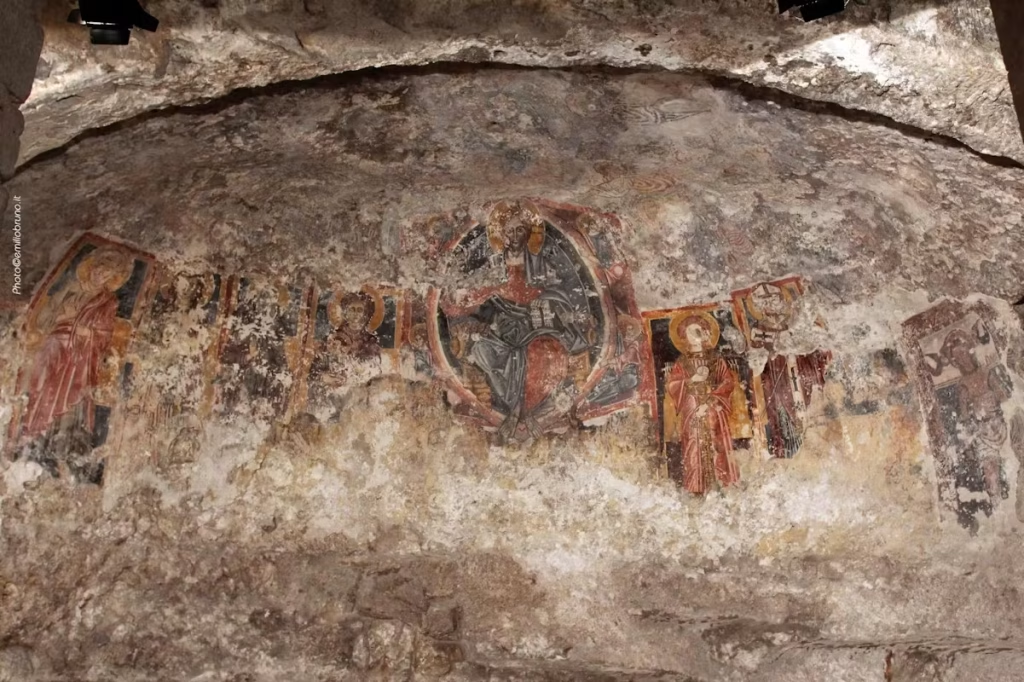
The rupestrian church of San Nicolò Inferiore, located on Via Clemente Grimaldi in the heart of Modica Bassa, represents one of the oldest and most precious testimonies of Christian worship in the city. Excavated directly into the rock between the 11th and 12th centuries, this underground church was rediscovered by chance in 1987 during private work, bringing to light a sacred environment of great historical and artistic value. The simple layout, with a rupestrian altar and semicircular apse, houses well-preserved frescoes of Byzantine origin, including the majestic figure of Christ Pantocrator, a symbol of power and divinity. Today, the church is a museum site accessible to visitors accompanied by expert guides, who illustrate its importance as a rare example of medieval sacred rock art in Sicily. This extraordinary place represents a deep link with Modica’s religious and cultural roots.

Church of San Giacomo

The Church of San Giacomo is an ancient building of medieval origin located on a panoramic hill overlooking the surrounding countryside, offering suggestive views of the Modican territory. Characterised by a sober and simple appearance, it has a façade in local stone devoid of elaborate decorations and a small bell gable, typical of rural churches. Inside, the single-nave environment houses a stone altar and remains of pictorial decorations, evidence of ancient artistic and devotional practices. Historically, the church was dedicated to the cult of St James and was a pilgrimage destination and a fundamental reference point for the agricultural communities of the area, who gathered there for moments of prayer and celebration. Although today it is only open on rare religious occasions, this church remains a precious example of popular religiosity and minor sacred architecture, a witness to the spiritual history of the Modican territory.

The Carmine Monumental Complex

The Carmine Monumental Complex, located in Piazza Matteotti in the heart of Modica Bassa, is one of the city’s oldest and most important religious buildings. Founded in the 14th century by Carmelite friars, the complex comprises the church and what remains of the convent attached to it. The church is distinguished by its elegant Gothic ogival portal made of black stone, known as pitch stone, and a fine carved rose window that illuminates the interior. The building has a single nave plan, flanked by richly decorated side chapels. The convent, although partially lost, is now a vital space that hosts cultural events, exhibitions and artistic initiatives, contributing to the city’s cultural vibrancy. Although it survived the 1693 earthquake unscathed, the complex has benefited from restorations that have preserved its Chiaramonte Gothic style, enriched with Renaissance elements. Today it is both a spiritual and cultural landmark, a living testimony to Modica’s history.

Cathedral of San Pietro

The Cathedral of San Pietro, located along the central Corso Umberto I in Modica Bassa, is one of the city’s most important and representative religious buildings and a magnificent example of Sicilian Baroque art. The current structure is the result of reconstruction in the 18th century, following the devastating 1693 earthquake that struck the entire Val di Noto. Its elegant façade in local limestone is embellished with twisted columns, niches with Baroque statues and an imposing staircase adorned with twelve statues depicting the Apostles, giving the complex a scenic and solemn appearance. The interior, divided into three naves, is decorated with fine stucco work, artistic side altars and a ceiling frescoed with sacred motifs. Of particular note are the high altar in polychrome marble and the recently restored 18th-century organ. Today, the cathedral is not only an active place of worship but also a cultural centre, a witness to Modica’s faith and millennial history.

The Collegiate Church of Santa Maria di Betlem

The Collegiate Church of Santa Maria di Betlem is one of the oldest and most significant churches in Modica, an authentic treasure chest of history, art and faith that has its roots in the 14th century. Over the centuries, it has undergone numerous structural and stylistic interventions that have enriched its architectural profile. The current façade is divided into two distinct orders: the first, in Renaissance style, dates back to the end of the 16th century, while the second, in Neoclassical style, was built between 1816 and 1821, following extension and consolidation works. The interior, divided into three naves, preserves an elegant painted wooden ceiling, a fine pulpit carved in local stone and a fully functioning 18th-century organ. Of great devotional and artistic importance is the wooden statue of Our Lady of Bethlehem, kept in a side chapel and venerated by the faithful of Modica. The Collegiate Church represents one of the highest expressions of the city’s spirituality and religious tradition.