
Un percorso che unisce i luoghi legati alla letteratura e ai grandi autori siciliani, con le magnificenze barocche che ne hanno ispirato atmosfere e racconti.

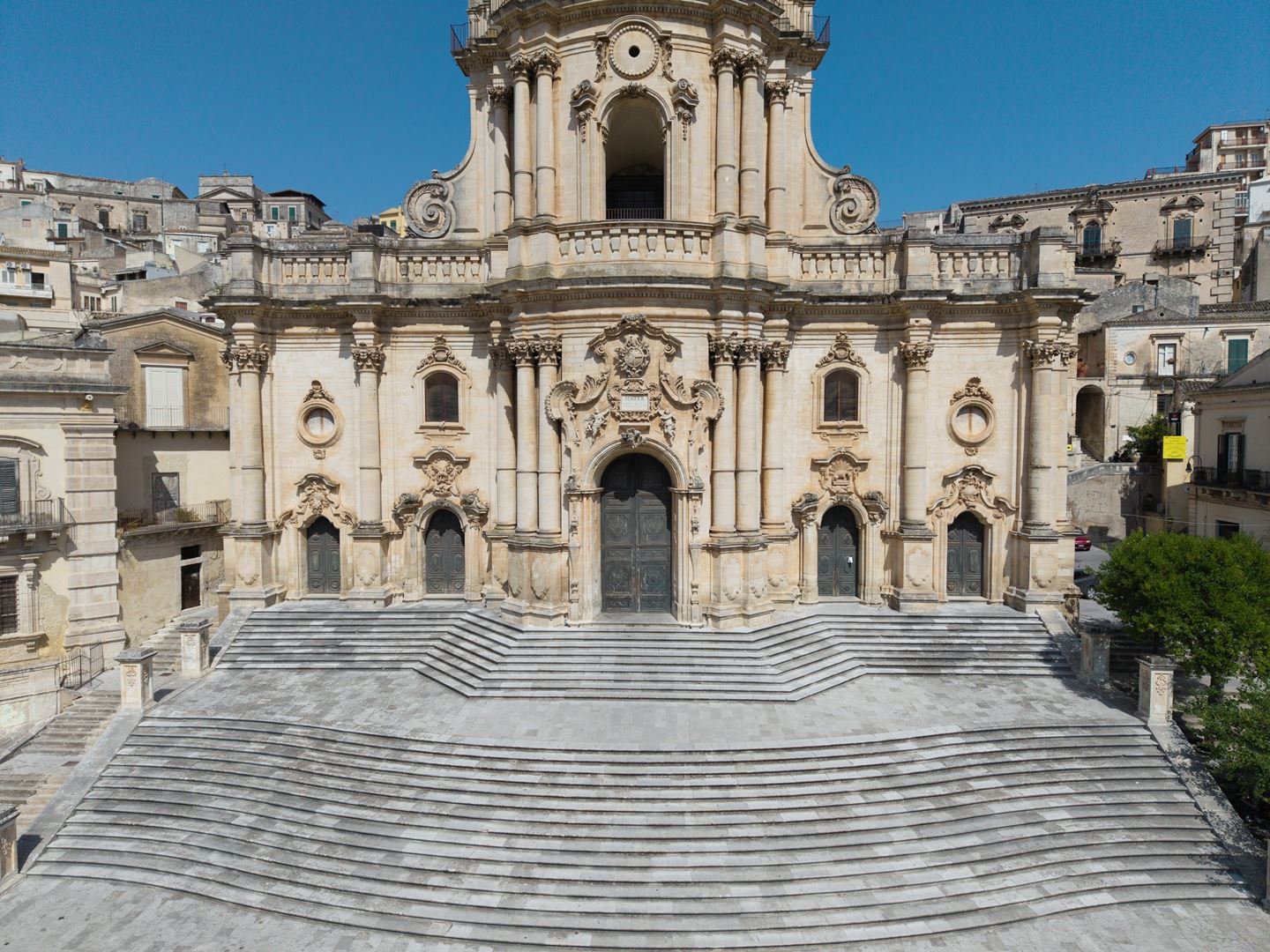
Duomo di San Giorgio
The Cathedral of San Giorgio is Modica's most majestic monument and one of the masterpieces of Sicilian Baroque. It was built over medieval buildings after the arrival of Ruggero d'Altavilla and, rebuilt several times after major earthquakes (1542, 1613, 1693), took on its current appearance between the 18th and 19th centuries. Architectural masterpieces such as the scenic staircase (up to 260 steps) and the 62 m high tower-facade emphasise its theatricality. Inside, a Latin-cross layout with 22 Corinthian columns, stucco work, frescoes, a monumental organ and works by Bernardino Nigro, Paladini, Cane and sculptors from Gagini create an impressive artistic itinerary. The floor sundial from 1895 and the “Santa Cassa” increase the cultural and historical value. A place of faith and identity, every year it is the scene of solemn processions, in particular that of St George, the city's patron saint. A UNESCO World Heritage Site, it is an essential stop for anyone visiting Modica who wants to immerse themselves in the splendour of the Eastern Baroque.

Basilica of Santa Maria Maggiore and the Sinatra Loggia
The Basilica of Santa Maria Maggiore in Ispica is one of the most significant examples of 18th-century Baroque architecture in Sicily. Located in the heart of the city, it was designed by Vincenzo Sinatra and stands out for its elegant façade in local stone, harmoniously divided into three tiers, and for the bell tower rising with sober grandeur. The single-nave interior is enriched with fine frescoes by Olivio Sozzi, marble altars, and important sacred artworks, among which the statue of the Immaculate Conception stands out. Adjacent to the church lies the famous Loggiato del Sinatra, a monumental colonnade that blends aesthetic and social functions, often used as a setting for cultural events, exhibitions, and celebrations. The complex has been declared a national monument and represents a cornerstone of local spirituality and culture. The basilica, together with the colonnade, is an essential stop for those wishing to explore Ispica’s artistic and religious history.

Church of San Giuseppe
Founded around 1500 by Giannantonio Miccichè in the district then known as Pendino, now called San Giuseppe, the church was elevated to the rank of grange of the Mother Church in 1598 by will of Bishop Don Giovanni Orosco. The 1693 earthquake caused serious damage to the building, which was, however, quickly rebuilt following sober and essential architectural lines. This gives the church a restrained yet elegant grandeur, still clearly visible today. The single-nave structure is an example of balanced Baroque, harmoniously integrated into the urban fabric of Scicli. The church remains an important spiritual landmark for the San Giuseppe district community and stands as a valuable testament to post-earthquake architecture and the resilience of the city.
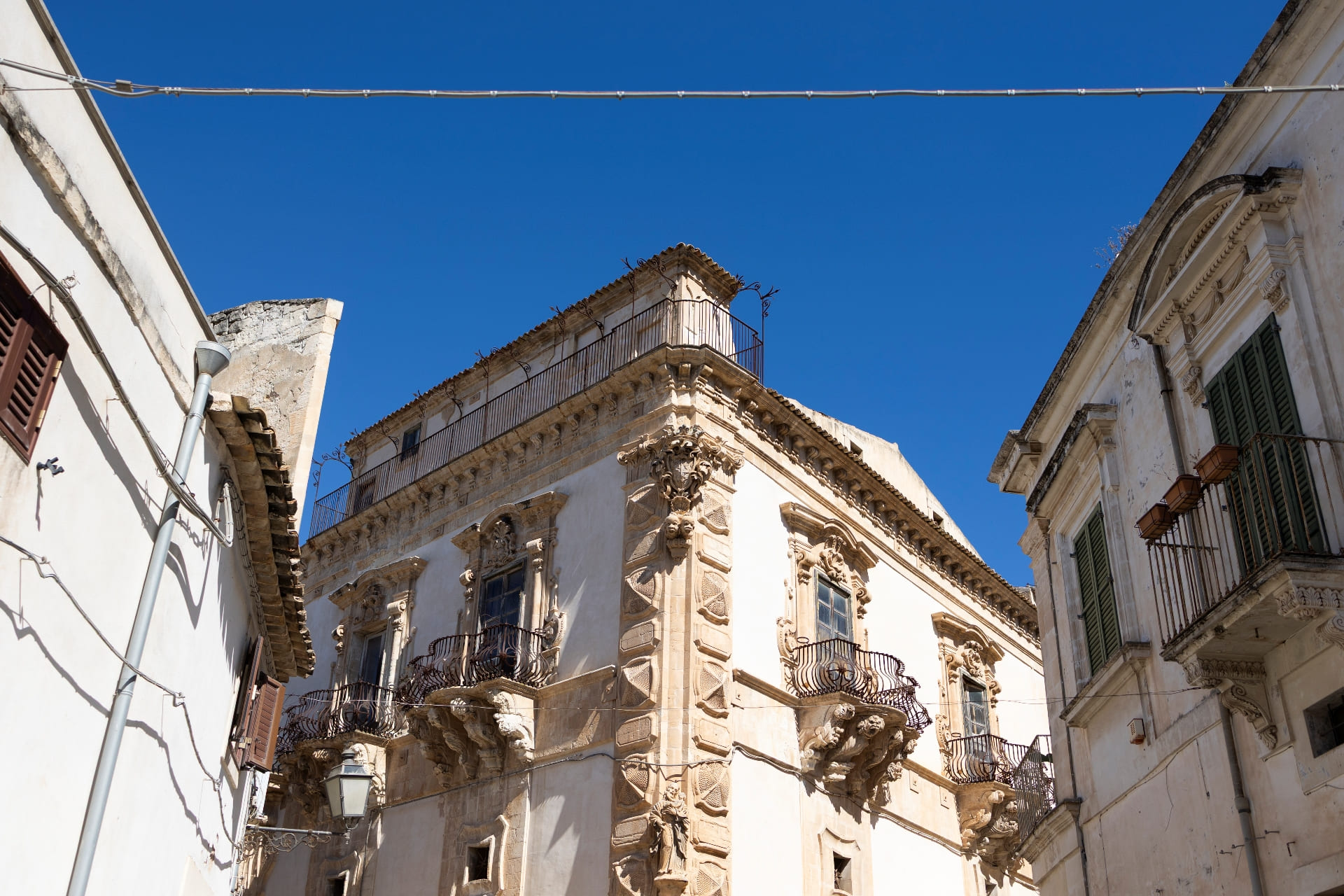
Palace Beneventano
Palace Beneventano is one of the finest expressions of Sicilian Baroque, located on Via Duca D'Aosta in Scicli, in the heart of the historic center. Built in the 18th century, the palace stands out for the extraordinary artistic quality of its façade, adorned with grotesque masks, sculpted corbels, allegorical figures, and curved wrought-iron balconies. This combination of elements creates a dramatic visual effect that blends symbolism, irony, and fantasy in a unique synthesis. Cited by scholars and art historians as one of the most significant examples of Iblean Baroque, the palace is not currently open to the public but continues to attract visitors, photographers, and enthusiasts for its exceptional beauty. It is considered one of the symbolic monuments of Scicli and a noteworthy piece of international architectural heritage.
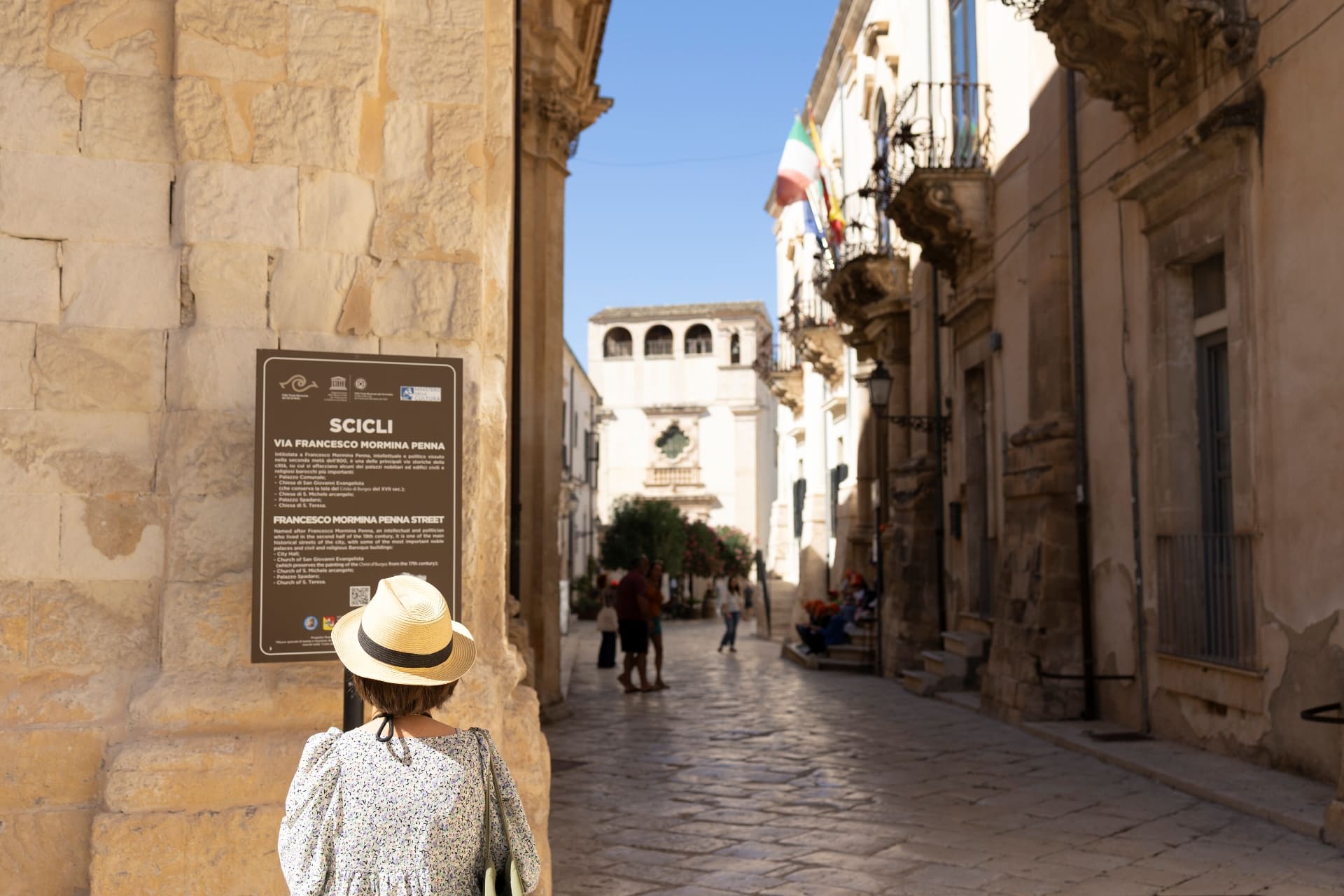
Via Francesco Mormina Penna
Via Francesco Mormina Penna is one of the main arteries of Scicli’s historic center and has been declared a UNESCO World Heritage Site as part of the “Late Baroque Towns of the Val di Noto.” The street gently descends from Piazza Municipio and features a sequence of buildings ranging from the 17th to the 20th century. Key landmarks along the way include the Church of San Giovanni Evangelista, the Church of Santa Teresa d’Avila, the Church of San Michele Arcangelo, and the Town Hall, built between 1902 and 1906 in an eclectic Neo-Renaissance style. The street is known for its harmonious blend of architectural styles, with façades in local limestone and Baroque decorations. It is a lively and well-frequented place, hosting cultural events and religious celebrations. The street also serves as a filming location for the famous TV series Inspector Montalbano, standing in as the police station of the fictional town of Vigata.
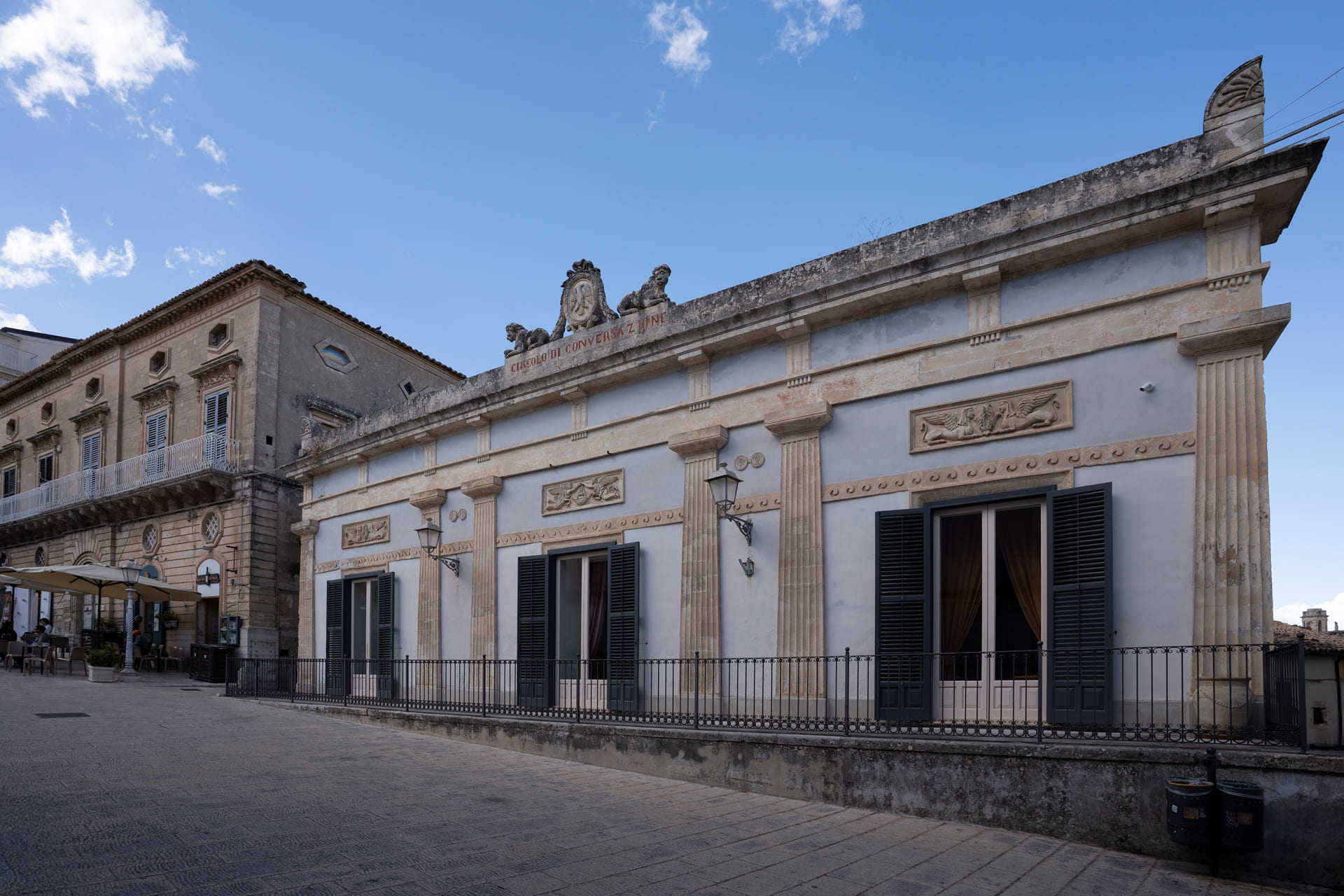
Conversation Club
The Ragusa Ibla Conversation Club is a fine example of neoclassical architecture, founded in 1830 at the behest of the local aristocracy. Located in Piazza Duomo, the building is distinguished by its elegant façade, characterised by Doric pilasters and bas-reliefs depicting mythological figures. Inside, the sumptuous ballroom features a ceiling frescoed by Tino Del Campo, with allegories of the arts and sciences and medallions depicting Dante, Michelangelo, Galileo and Vincenzo Bellini. The rooms, furnished with original furniture, preserve the atmosphere of the time, offering a glimpse of the social life of the 19th-century Sicilian aristocracy. Today, the Circolo is a private cultural centre, open to the public only through guided tours, which allow visitors to discover its history and artistic heritage.
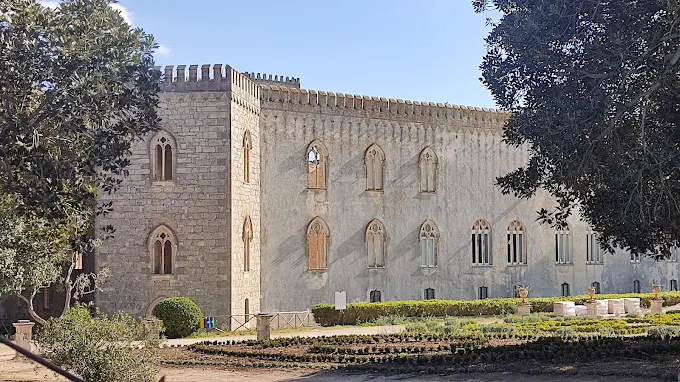
Donnafugata Castle
The Donnafugata Castle, located in the district of the same name a few kilometres from Ragusa, is a sumptuous 19th-century aristocratic residence built on pre-existing medieval structures. Its scenic neo-Gothic façade, with battlements and turrets, overlooks a charming rural landscape. Inside there are more than 120 rooms, many of which preserve original furnishings, frescoes and period objects that tell of the life of the Sicilian nobility. The castle is surrounded by a vast park in the English romantic style, embellished with artificial grottoes, an impressive stone maze, fountains and decorative pavilions. Now open to the public as a museum, it hosts cultural events and guided tours. The castle is also known for being the film set of the TV series “Il Commissario Montalbano”. A fascinating place where history, art and landscape come together in a unique way.
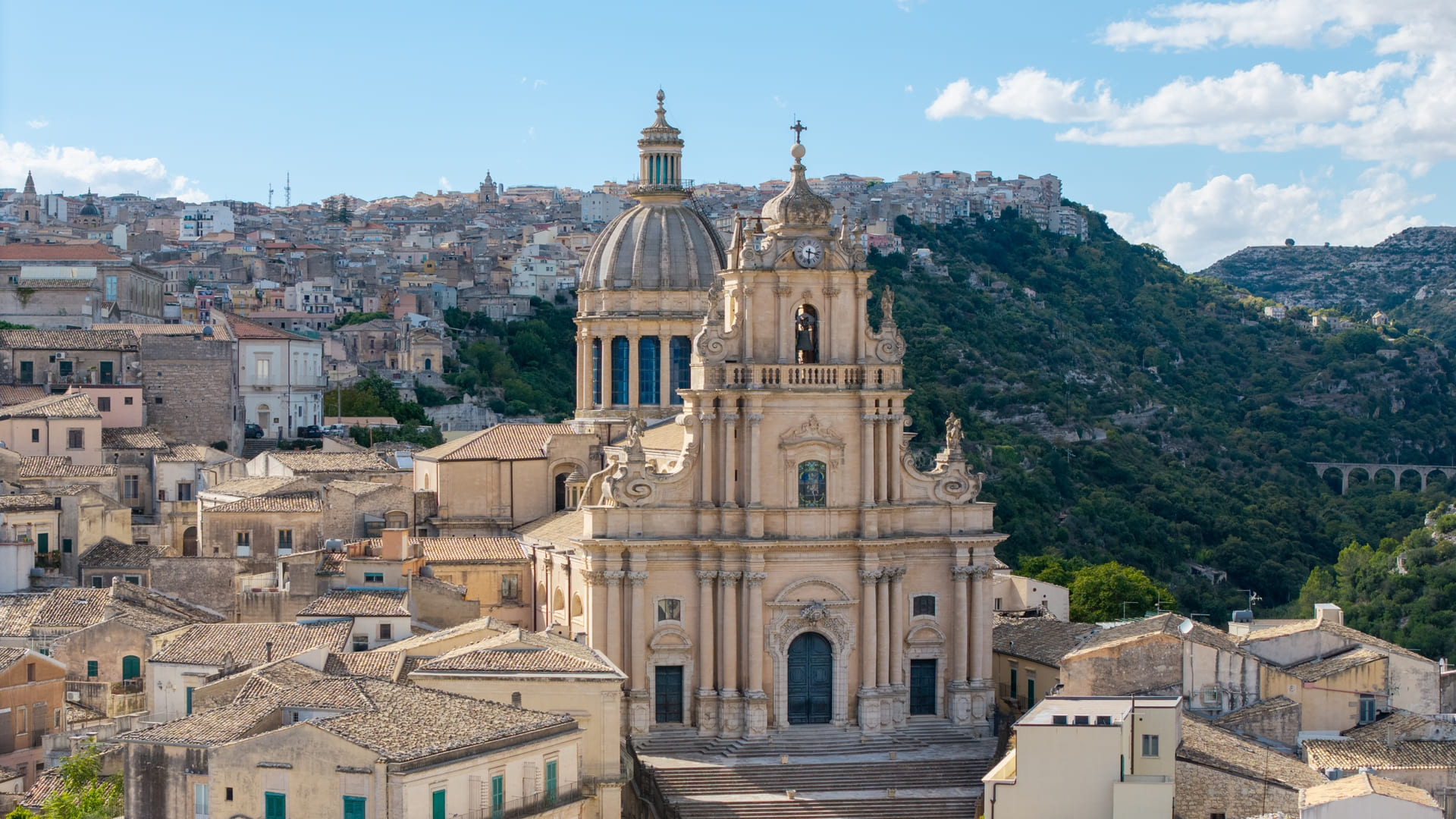
Square Duomo and the Church of San Giorgio
Squadre Duomo is the beating heart of Ragusa Ibla, framed by the majestic Church of San Giorgio, an authentic masterpiece of Sicilian Baroque built between 1739 and 1775. This church is distinguished by its imposing three-order façade, richly decorated with Corinthian columns, niches and statues reflecting the city's deep religious and artistic tradition. The interior, finely decorated with elaborate stucco work and frescoes of great historical and artistic value, creates a solemn and evocative atmosphere. The monumental staircase that connects Piazza Duomo to the area below constitutes a scenic route of great visual impact, making the complex an essential reference point for believers, tourists and art and culture enthusiasts. Piazza Duomo is undoubtedly one of the most representative and best-loved symbols of Ragusa Ibla, a hub of religious and cultural events that animate the city's historic heart.
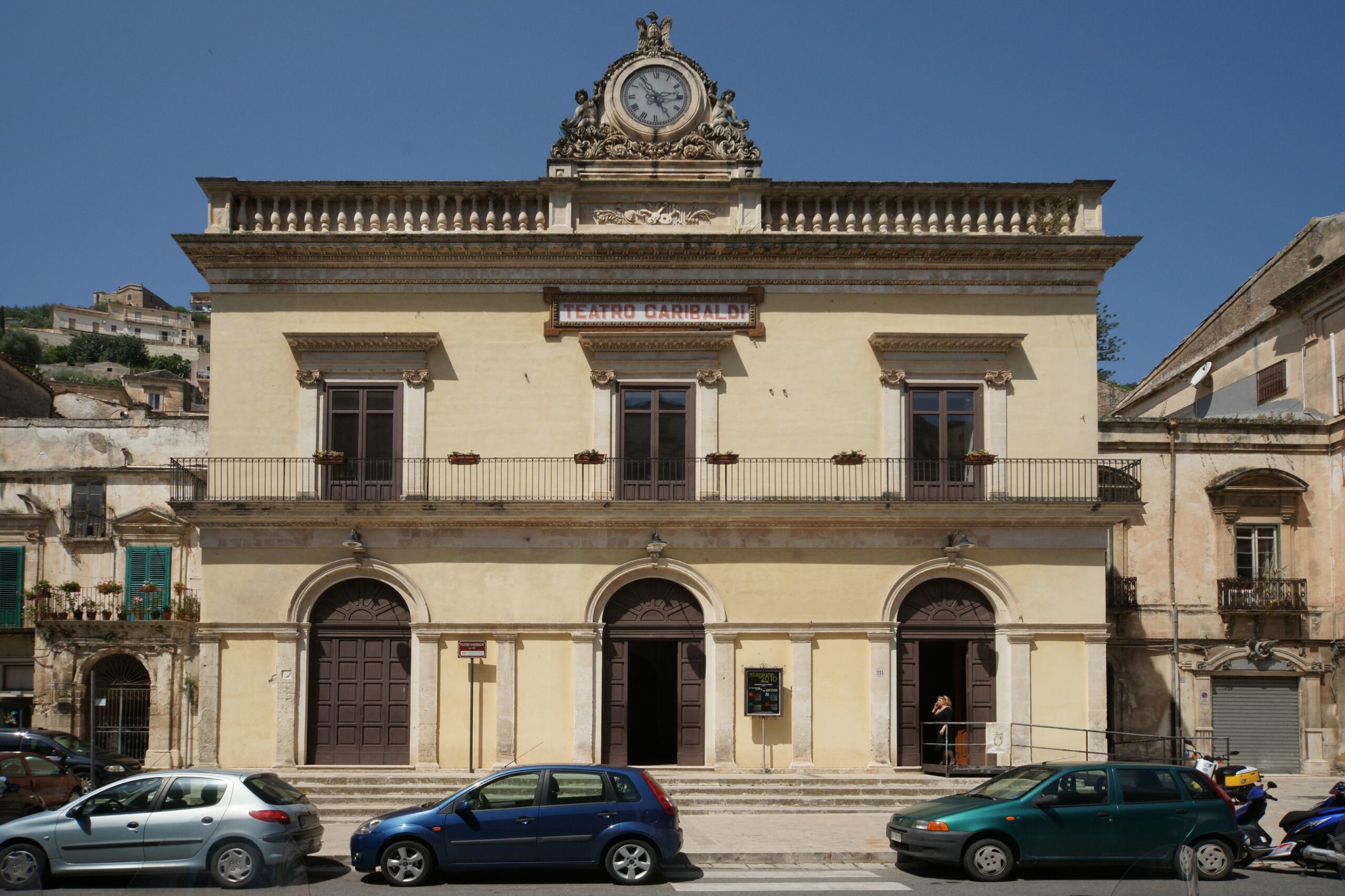
The Garibaldi Theatre
The Garibaldi Theatre in Modica, inaugurated in 1857, is one of the city's most important and evocative historical theatres. Located in the heart of Modica Bassa, along the central Corso Umberto I, it has an elegant neoclassical façade embellished with refined Art Nouveau details that highlight its prestige and history. Inside, the structure is organised with a wide stall and numerous boxes arranged in a horseshoe shape, typical of 19th-century theatres, offering an optimal view of the stage from every point. The ceiling, finely frescoed and decorated, contributes to a refined and cosy atmosphere. The stage, fitted with modern equipment, hosts plays, concerts, operas and other cultural events, making the theatre the beating heart of Modica's artistic life. Named after Italian national hero Giuseppe Garibaldi, the theatre represents a symbol of cultural and social identity for the local community.
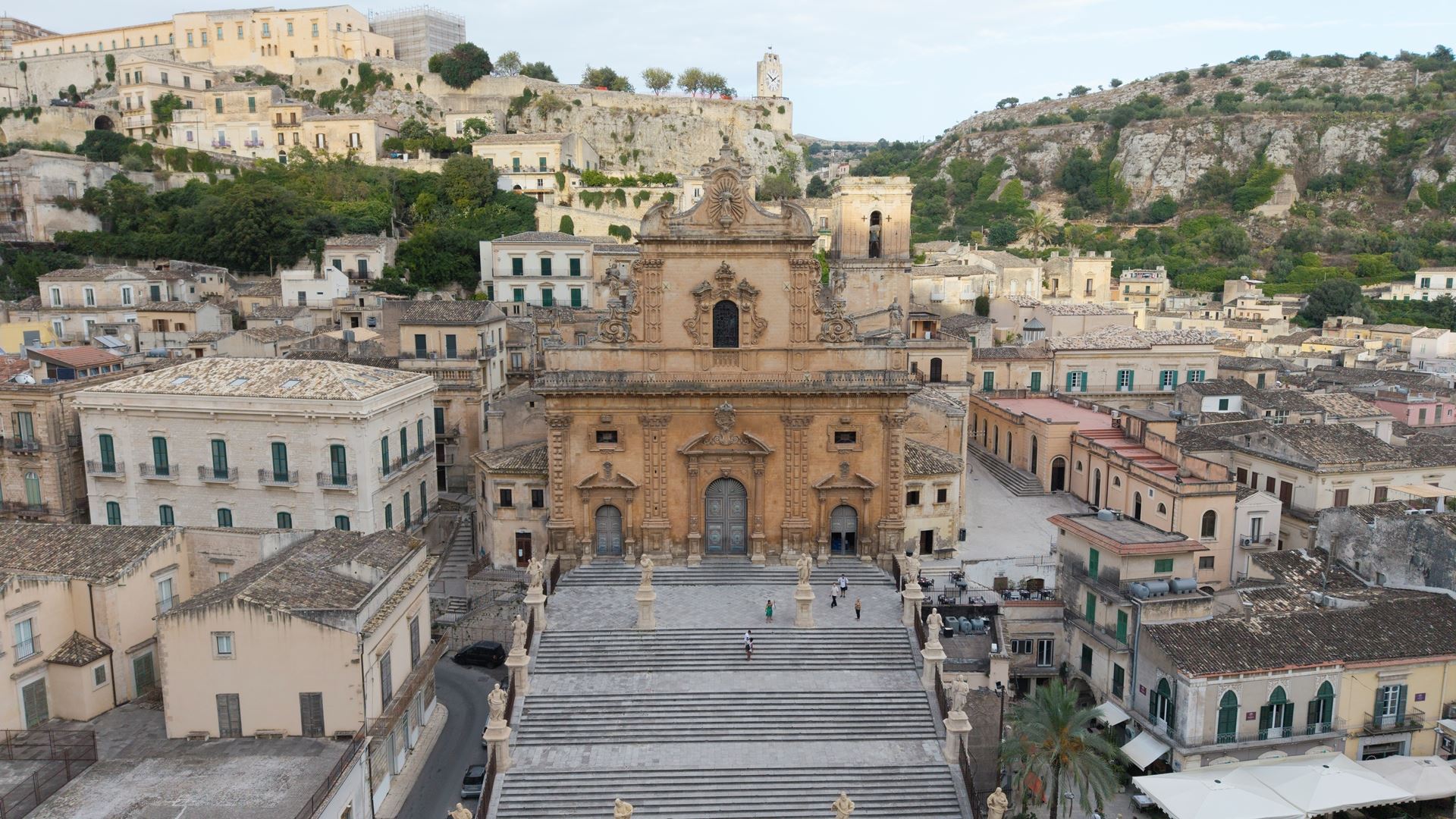
Cathedral of San Pietro
The Cathedral of San Pietro, located along the central Corso Umberto I in Modica Bassa, is one of the city's most important and representative religious buildings and a magnificent example of Sicilian Baroque art. The current structure is the result of reconstruction in the 18th century, following the devastating 1693 earthquake that struck the entire Val di Noto. Its elegant façade in local limestone is embellished with twisted columns, niches with Baroque statues and an imposing staircase adorned with twelve statues depicting the Apostles, giving the complex a scenic and solemn appearance. The interior, divided into three naves, is decorated with fine stucco work, artistic side altars and a ceiling frescoed with sacred motifs. Of particular note are the high altar in polychrome marble and the recently restored 18th-century organ. Today, the cathedral is not only an active place of worship but also a cultural centre, a witness to Modica's faith and millennial history.
The birthplace of Salvatore Quasimodo
The birthplace of Salvatore Quasimodo, located in Via Posterla in Modica, is the place where one of the greatest Italian poets of the 20th century, winner of the Nobel Prize for Literature, was born in 1901. Transformed today into a museum house, it jealously preserves the original furnishings, personal objects and the famous Olivetti typewriter with which Quasimodo composed his works, offering an authentic and intimate atmosphere. The simple, intimate environment recounts the poet's humble origins and life through photographs, documents, manuscripts and texts on display, allowing visitors to come into contact with his human and artistic experience. The house represents a fundamental reference point for lovers of literature and culture, becoming a space of living memory and a profound symbol of the cultural identity of the city of Modica.

The Mother Church of San Giovanni Battista
The Mother Church of San Giovanni Battista, overlooking Piazza Vittorio Emanuele II, is the religious and monumental heart of Santa Croce Camerina. Built in the early 1600s on a medieval structure, it was extensively renovated between 1797 and 1885 based on designs by architect Teodoro Gigante, with master builders Giuseppe Mazzarella, Giovanni Vaccaro, and Dionisio Bocchieri. The building, 45 meters long, features a Latin cross plan with three naves, a central dome, transept, and side chapels. Inside are valuable artistic works: a copy of Martin Faber’s Madonna of Loreto, a wooden statue of Saint Joseph, the city’s patron saint, and the funerary monument commissioned by the Celestri family in 1604. The frescoes of the four Evangelists in the dome, painted in 1986 by local artist Giovanni Aquila, further enrich the sacred space. Today, the church is the center of major religious celebrations, including the Feast of Saint Joseph, maintaining strong ties with the local community.