Palace Fava

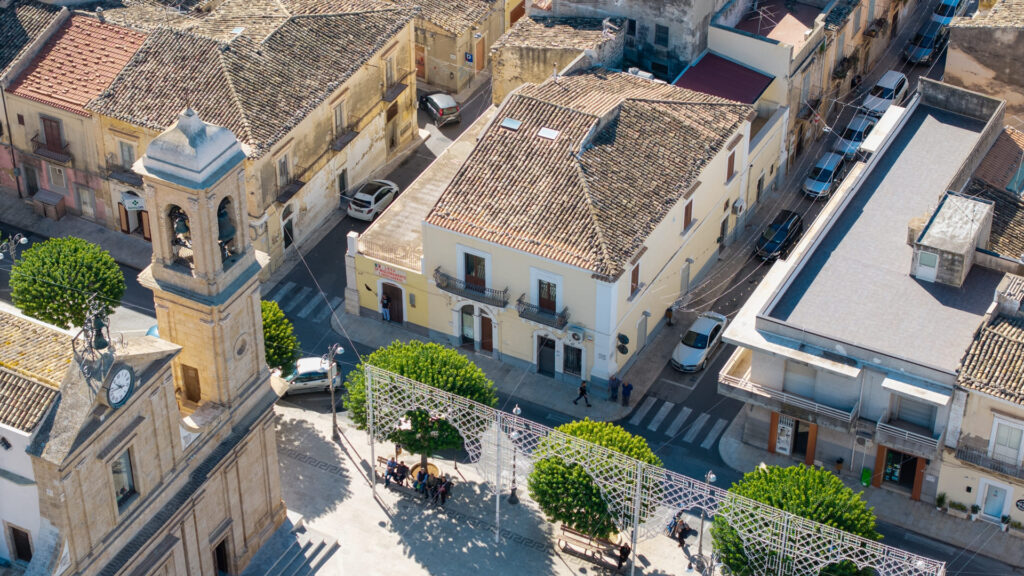
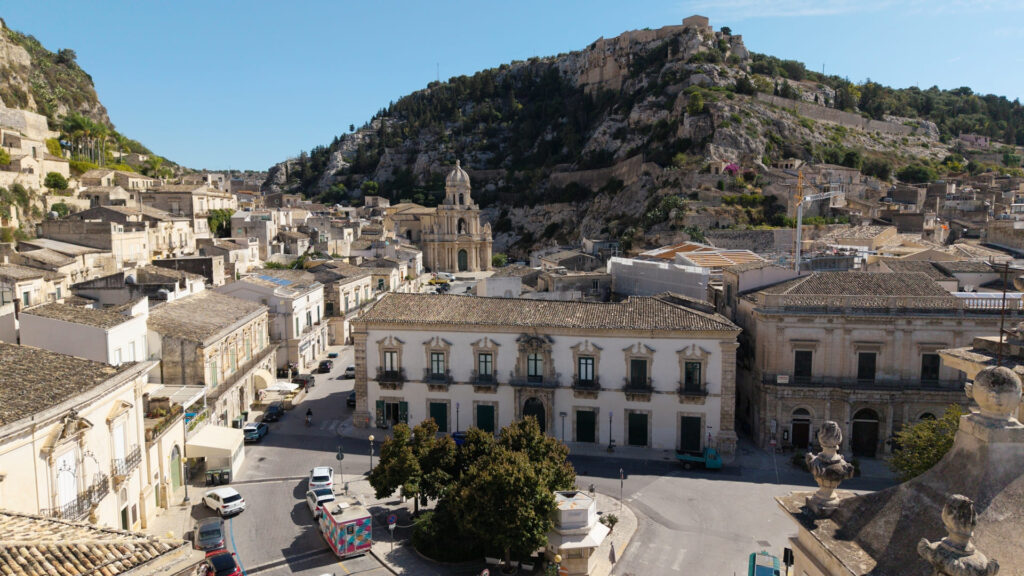
Located in Scicli’s Piazza Italia, Palace Fava is a historic residence dating back to the late 18th century. The building is notable for its unique urban layout, with two main façades facing Via San Bartolomeo and Via Castellana, highlighting its importance within the city’s monumental and historical fabric. Built in the Sicilian late Baroque style, the palace is distinguished by elegant wrought iron balconies, moulded cornices, and understated local stone portals, which enhance its refined architectural presence. Although currently privately owned and not regularly open to the public, Palazzo Fava remains a significant contributor to the identity and prestige of Scicli’s historic center, one of the jewels of the Val di Noto, renowned for its exceptional artistic and cultural heritage.
The archaeological site of Caucana

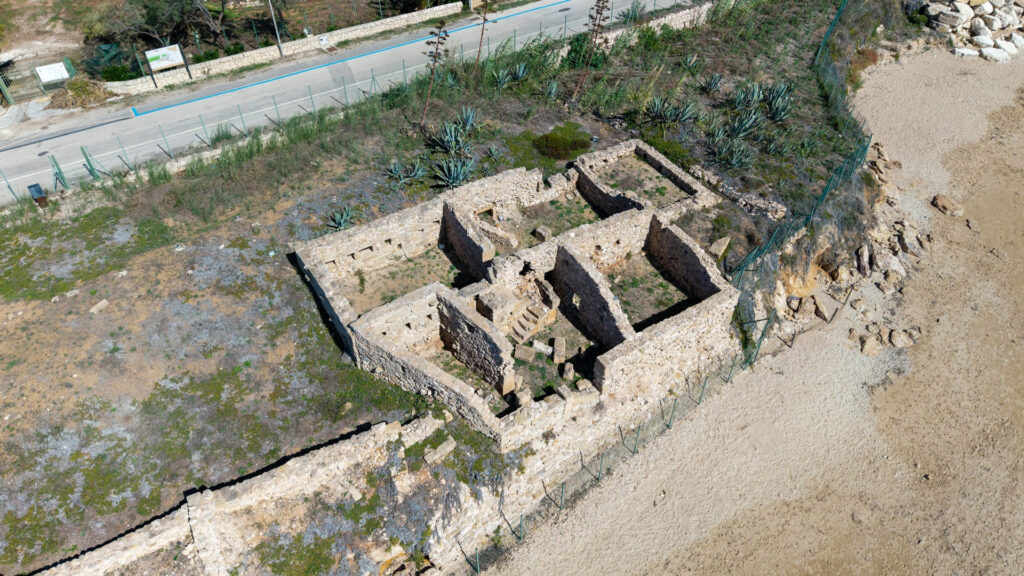
The archaeological site of Caucana preserves the remains of an ancient coastal settlement active between the 4th and 7th centuries AD, likely a port village dependent on Kamarina. Excavations reveal rectangular-plan houses, a basilica with an apse, worship areas, and stretches of road that attest to continuous settlement during the Byzantine period. The houses, built with local stone and often arranged around courtyards, reflect a simple yet functional urban layout. Overlooking the sea, Caucana represents a rare example of coastal urban archaeology in southeastern Sicily. Today, the site is accessible via marked pathways that enhance its historical and scenic value, offering visitors an immersive journey into the ancient history of the region.

San Bartolomeo Caves

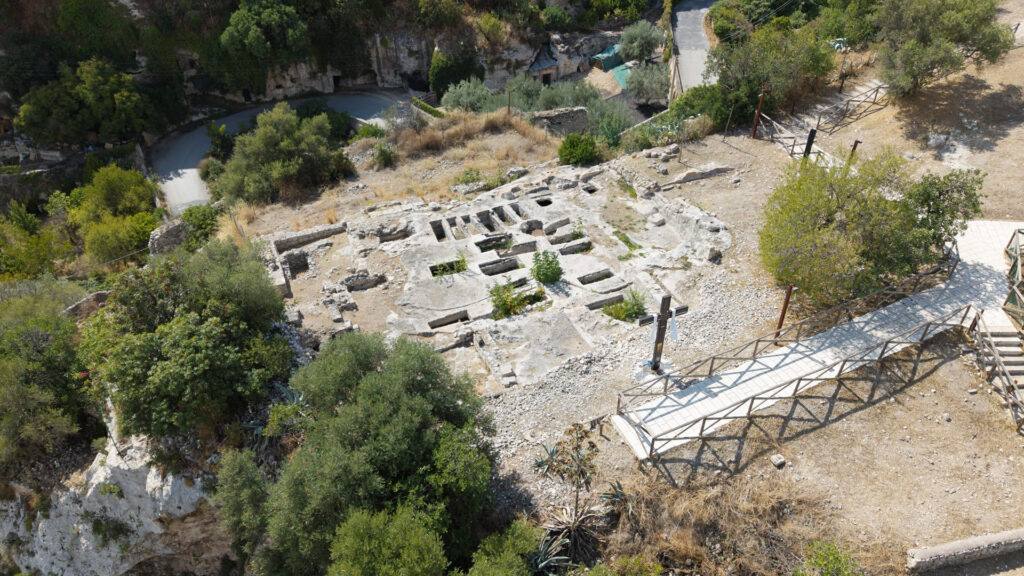
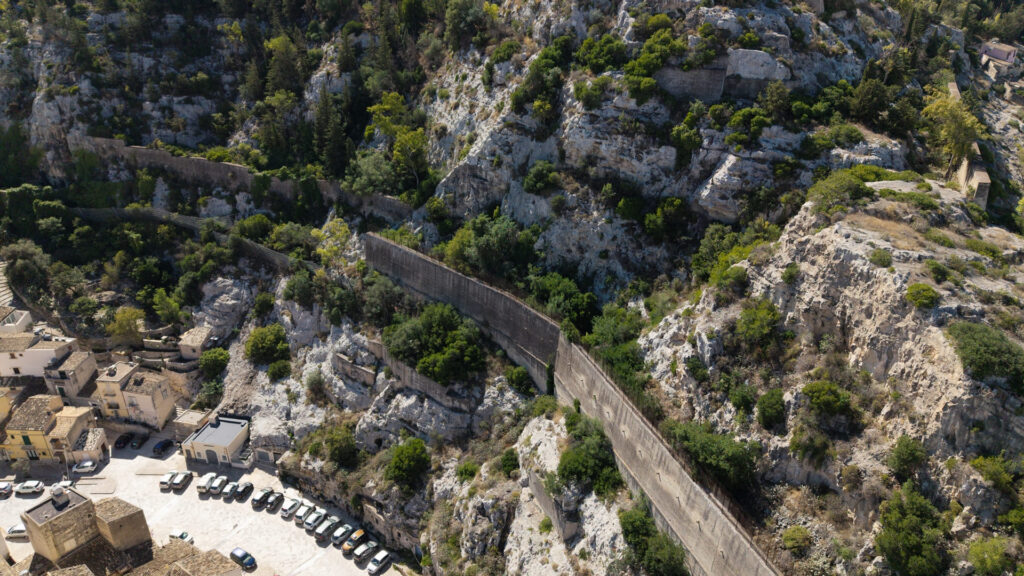
The San Bartolomeo Caves are located in a narrow and lush valley in Scicli, nestled between imposing calcarenite walls that enhance their natural charm. This rock-cut complex consists of numerous hand-carved cavities in the stone, which were used in past centuries as troglodyte dwellings, temporary shelters, and storage spaces by local communities. Some of the caves still display traces of architectural elements and functional excavations, bearing witness to a continuous use adapted to the needs of the rural population. The surrounding area, with terraced fields and nature trails, creates a landscape of rare beauty where nature and history blend harmoniously. Today, the caves offer valuable testimony to traditional forms of habitation and daily life in the Iblean territory, providing a unique opportunity to immerse oneself in the rural past of this part of Sicily.

Vigliena Tower

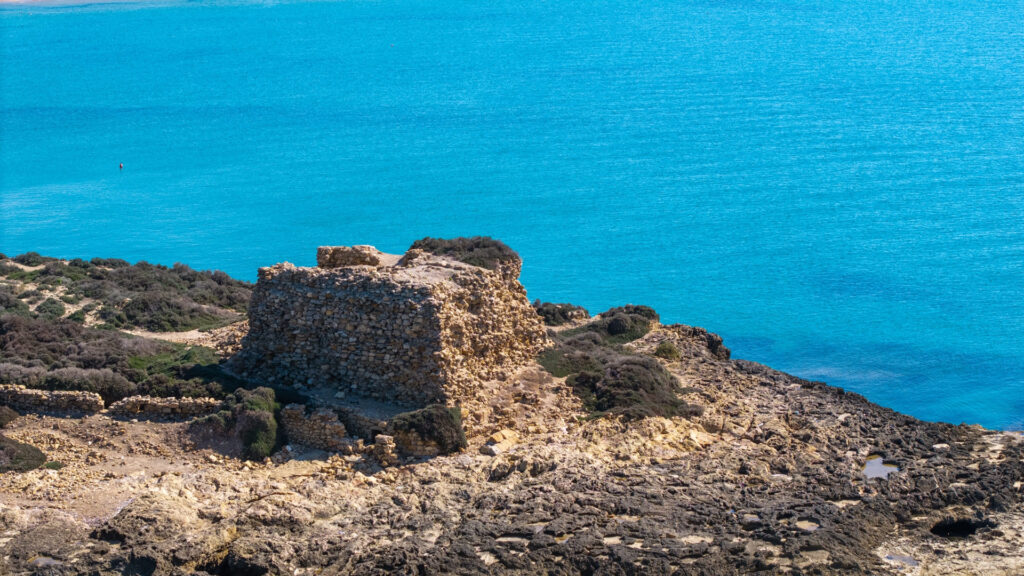
The Vigliena Tower, built in the 17th century, was part of the coastal defense system established by the Spanish viceroys to protect Sicily from corsair raids. Located on a promontory at Punta Braccetto, between Santa Croce Camerina and Scoglitti, the tower monitored a particularly exposed stretch of coastline. Constructed from local stone with a square plan and solid structure, it housed sentinels and firearms to defend the shore. Although now partially damaged, it remains an important example of coastal military architecture from the period. Set in a scenic landscape between sea and unspoiled nature, the Vigliena Tower stands as a historical symbol and a point of interest for visitors to the area.

Via Francesco Mormina Penna

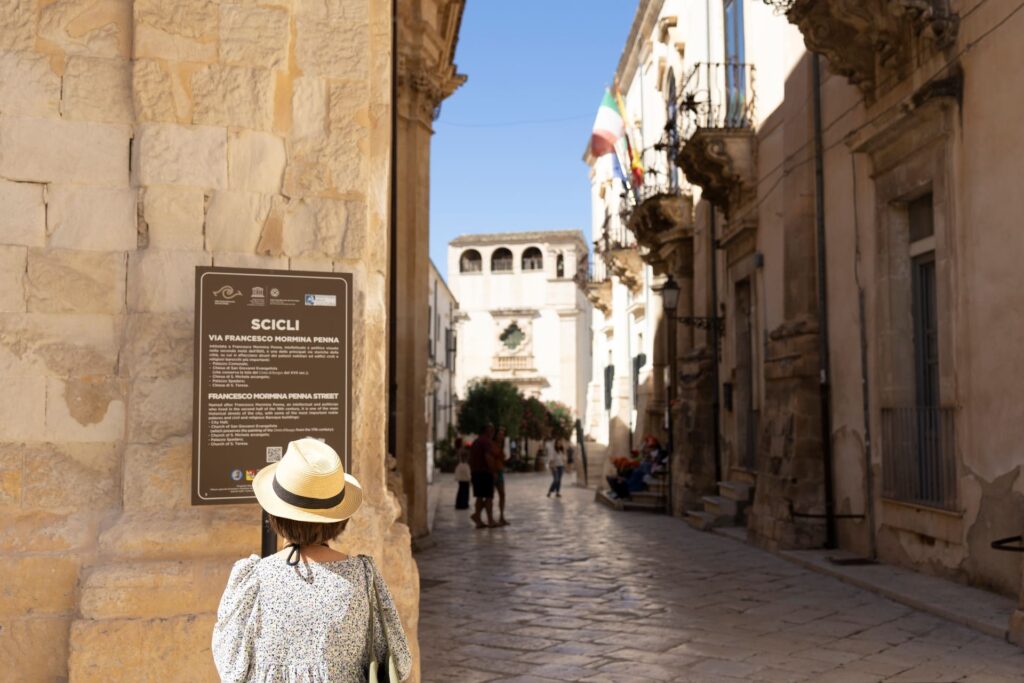
Via Francesco Mormina Penna is one of the main arteries of Scicli’s historic center and has been declared a UNESCO World Heritage Site as part of the “Late Baroque Towns of the Val di Noto.” The street gently descends from Piazza Municipio and features a sequence of buildings ranging from the 17th to the 20th century. Key landmarks along the way include the Church of San Giovanni Evangelista, the Church of Santa Teresa d’Avila, the Church of San Michele Arcangelo, and the Town Hall, built between 1902 and 1906 in an eclectic Neo-Renaissance style. The street is known for its harmonious blend of architectural styles, with façades in local limestone and Baroque decorations. It is a lively and well-frequented place, hosting cultural events and religious celebrations. The street also serves as a filming location for the famous TV series Inspector Montalbano, standing in as the police station of the fictional town of Vigata.

Palace Rinzivillo–Portelli

The Palazzo Rinzivillo–Portelli, overlooking Piazza Vittorio Emanuele II in Santa Croce Camerina, is a noble residence built between the 17th and 18th centuries, showcasing the elegance of Sicilian Baroque. The façade, articulated with shaped string courses, features a monumental carved stone portal crowned by a curved pediment, and wrought-iron balconies supported by local stone corbels. The lowered arch windows are adorned with decorative stuccoes, while the original interiors—featuring barrel vaults and 18th-century decorations—remain remarkable but are reserved for special occasions. Following conservative restorations, the palace retains its historical charm: although privately owned, it opens its halls for exhibitions and cultural events, offering a fascinating glimpse into the urban nobility of the Val di Noto.

Fornace Penna

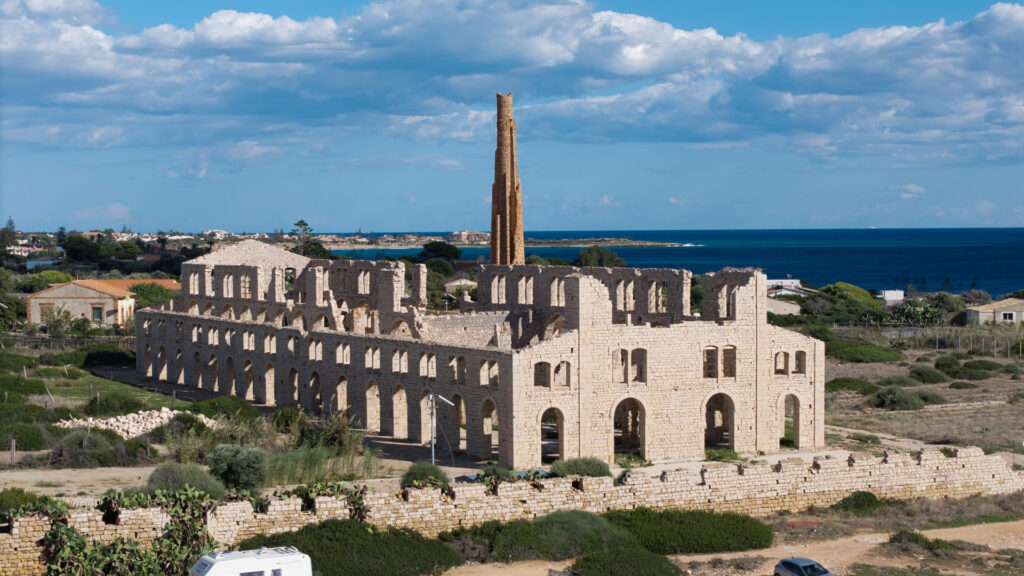
The Fornace Penna, located in the hamlet of Sampieri in the municipality of Scicli, is a significant historical industrial site completed in 1912 in Contrada Pisciotto. Designed for the production of bricks and tiles, it was a cornerstone of the local ceramic industry and played a crucial role in the economic development of the Iblean area in the early 20th century. In 1926, the factory was severely damaged by an arson fire, the causes of which remain shrouded in mystery, and its production activities were compromised. Despite this, the complex has retained its grandeur thanks to its rationalist industrial architecture, featuring tall chimneys, masonry structures, and functional spaces that reflect its historical and technical value. Today, the Fornace Penna is promoted as a cultural and tourist site, hosting events, exhibitions, and initiatives that celebrate the industrial and traditional heritage of Sampieri and the surrounding area, acting as a bridge between past and present.

Palace Spadaro

Palace Spadaro, located on Via Francesco Mormina Penna in Scicli, is a refined example of Sicilian Baroque architecture dating back to the 18th century. The façade features elegantly crafted wrought iron balconies, finely carved local stone portals, and rich stucco decorations that highlight the nobility and prestige of the family that once lived there. Inside, the palace preserves rooms of great artistic value, with coffered ceilings, frescoed halls, and original period furnishings that recreate the atmosphere of a bygone era. These elements tell the story of an aristocratic residence deeply rooted in Scicli’s cultural tradition. Today, Palazzo Spadaro is open to the public as a museum and hosts cultural events, exhibitions, and initiatives, serving as an important center for the promotion of local historical and artistic heritage.

Palace Beneventano

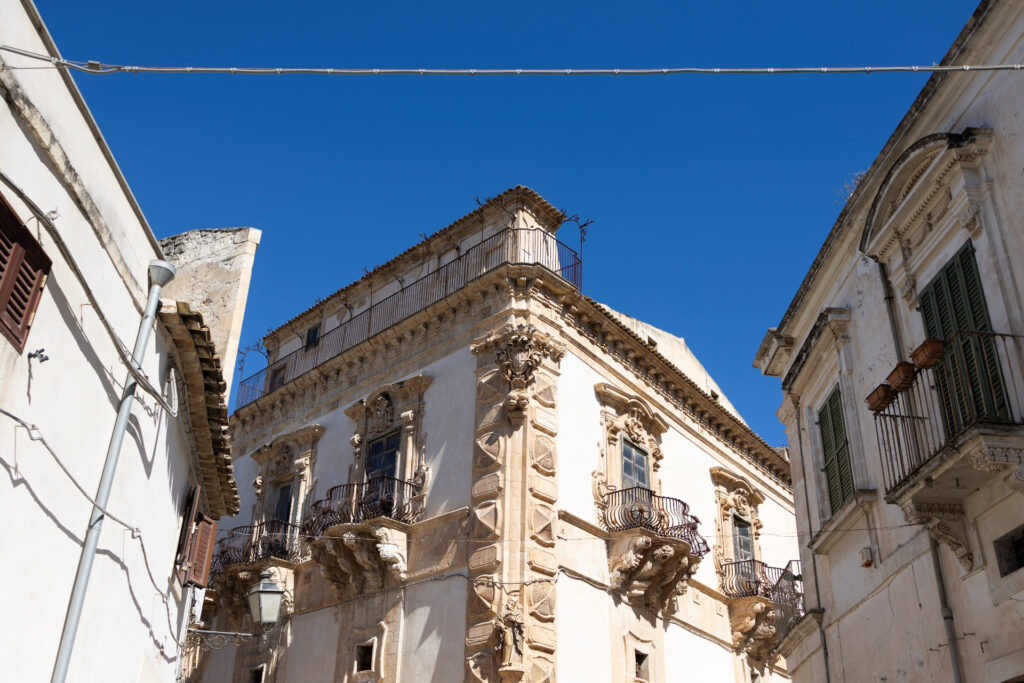
Palace Beneventano is one of the finest expressions of Sicilian Baroque, located on Via Duca D’Aosta in Scicli, in the heart of the historic center. Built in the 18th century, the palace stands out for the extraordinary artistic quality of its façade, adorned with grotesque masks, sculpted corbels, allegorical figures, and curved wrought-iron balconies. This combination of elements creates a dramatic visual effect that blends symbolism, irony, and fantasy in a unique synthesis. Cited by scholars and art historians as one of the most significant examples of Iblean Baroque, the palace is not currently open to the public but continues to attract visitors, photographers, and enthusiasts for its exceptional beauty. It is considered one of the symbolic monuments of Scicli and a noteworthy piece of international architectural heritage.

Quarry of Ispica and Forza Park

Quarry of Ispica is a river valley stretching about 13 km between Modica and Ispica, featuring rock-cut settlements that date from the Bronze Age (ca. 3000 BC) to the 14th century. The most significant area is Parco Forza, located on a fortified rocky spur known as the Fortilitium. Here you’ll find the remains of the Marchional Palace, medieval walls, the Church of the Annunziata, and hypogean structures such as stables and the famous “Centoscale” (Hundred Stairs) carved into the rock. The area is surrounded by caves, mills, rock carvings, catacombs, and an antiquarium. Today, the site is an open-air museum enhanced by cultural routes, nature excursions, and events like the living nativity scene, making it an essential destination for those who wish to explore the millennia-old relationship between humans and the environment in Sicily.