Cave dei Santi

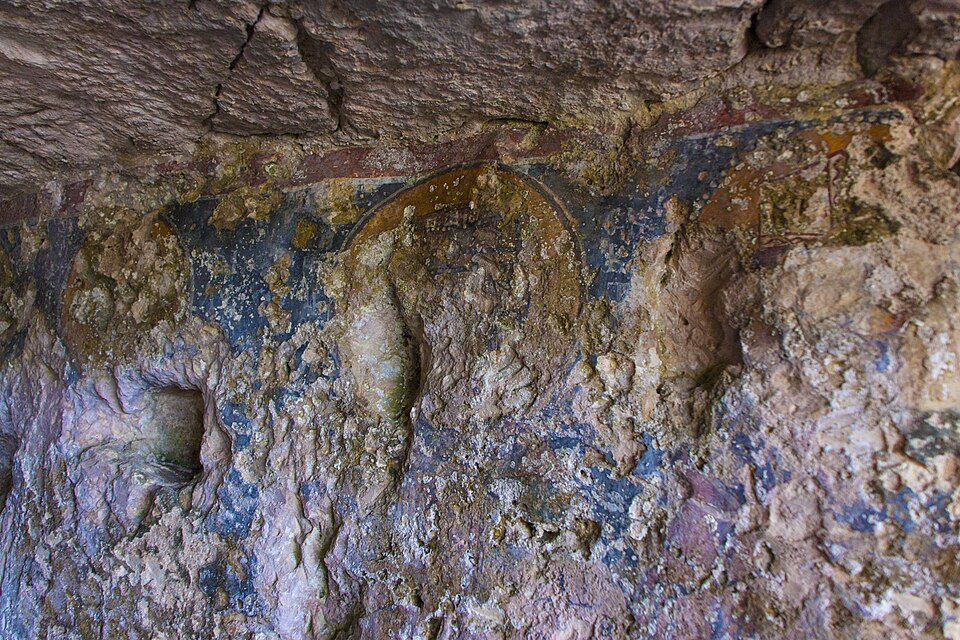
The Cave dei Santi is one of the most striking cave churches in Cava d’Ispica, chiselled into the limestone rock and consisting of a main nave (9.4×5.5 m ca.) and a smaller side room, possibly a sacristy. The interior walls house a cycle of Byzantine paintings with more than 30 figures of saints and bishops, depicted in half-length on a blue background, with gilded nimbuses: although the faces have been disfigured in search of coins, the images remain clearly legible. Remains of Greek inscriptions and identifications of figures such as St Lucia or St Helena confirm the cave’s role as a Byzantine sanctuary between the 4th and 6th centuries, with uses extending into the Norman era. Located halfway through the Archaeological Park, the Grotta dei Santi now offers an immersive experience between nature and history: a place of worship, a pictorial testimony and an ideal excursion destination for those who enjoy unconventional archaeology. The lack of signposts and the deterioration of the paintings add to its “hidden” charm, although they impose care and protection during the visit.
Park of San Giuseppe ‘U Timpuni

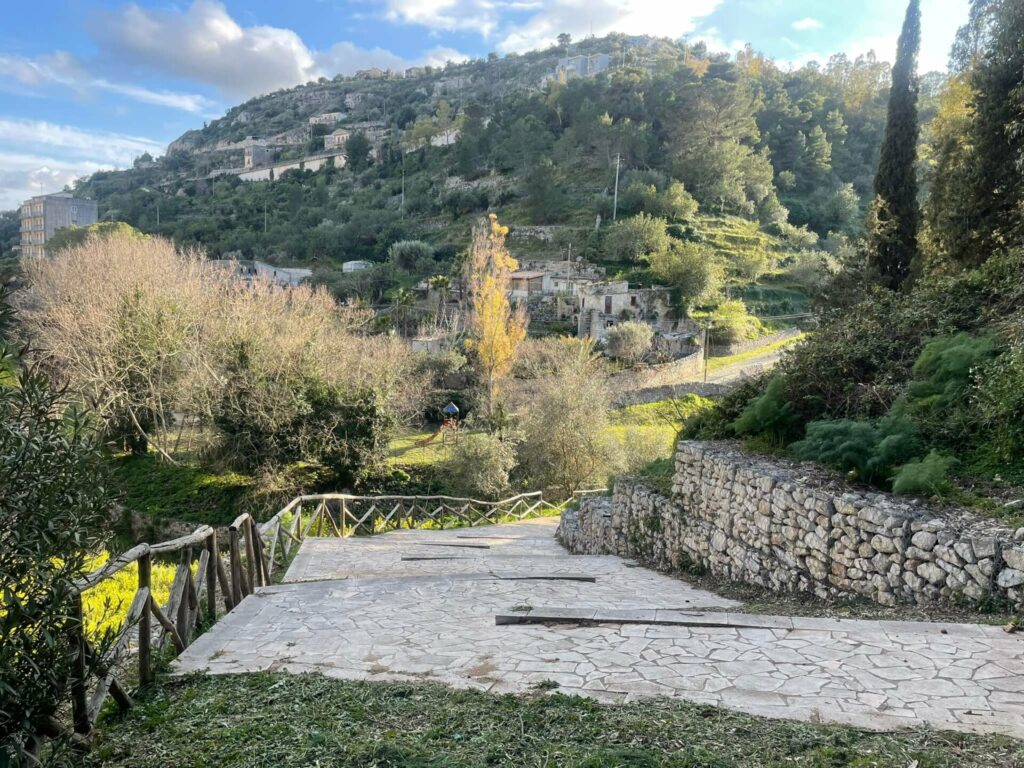
The Park of San Giuseppe ‘U Timpuni represents the true “green lung” in the heart of Modica’s historic centre, an oasis of peace and beauty set amidst the evocative alleyways of Ragusa’s Baroque. Located in a formerly abandoned area, it is now a virtuous example of urban and environmental regeneration. It houses an amphitheatre that hosts cultural events and jazz concerts, a well-equipped dog area and a Mediterranean scrub grove, the core of the CO₂Zero project promoted by ChocoModica, thanks to which 80 native trees were planted in 2019 to help reduce emissions. In March 2024, the park was further enriched with the inauguration of the Garden of the Righteous, where two trees were dedicated to Nicholas Winton and Felicia Impastato, witnesses of courage and memory. Walking along its paths and sitting on the benches is an immersive experience of nature, civic engagement and shared culture.

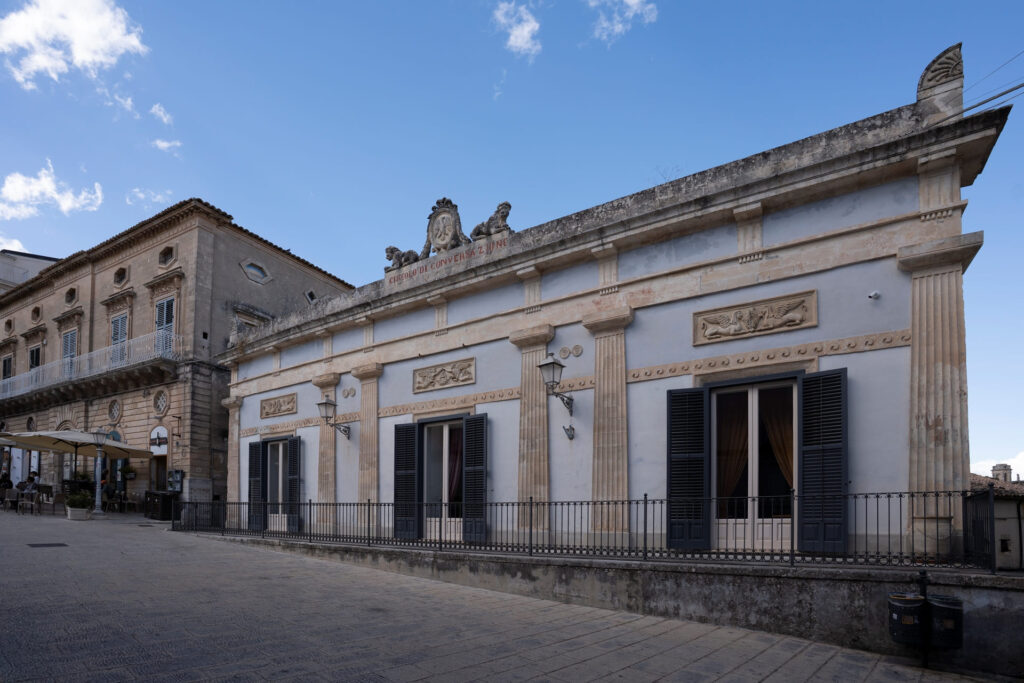
Conversation Club

The Ragusa Ibla Conversation Club is a fine example of neoclassical architecture, founded in 1830 at the behest of the local aristocracy. Located in Piazza Duomo, the building is distinguished by its elegant façade, characterised by Doric pilasters and bas-reliefs depicting mythological figures. Inside, the sumptuous ballroom features a ceiling frescoed by Tino Del Campo, with allegories of the arts and sciences and medallions depicting Dante, Michelangelo, Galileo and Vincenzo Bellini. The rooms, furnished with original furniture, preserve the atmosphere of the time, offering a glimpse of the social life of the 19th-century Sicilian aristocracy. Today, the Circolo is a private cultural centre, open to the public only through guided tours, which allow visitors to discover its history and artistic heritage.

Square Pola and Church of San Giuseppe

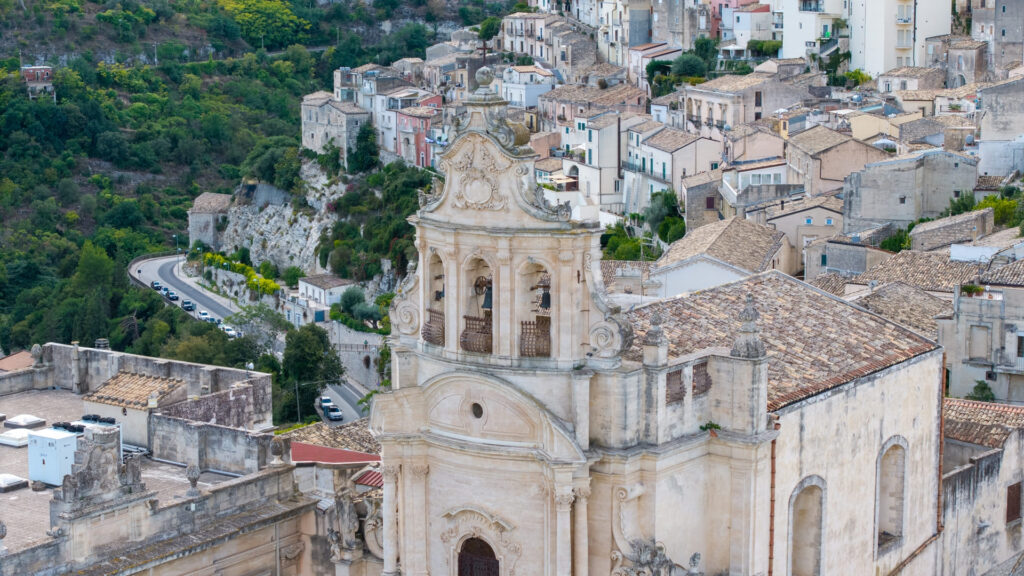
Square Pola, located in the heart of Ragusa Ibla, is one of the most important and lively urban spaces in the historic centre. This historic square is the fulcrum of the social, cultural and religious life of the district, a place where meetings, cultural events, shows and traditional markets are held, animating the city’s atmosphere on a daily basis. Surrounding the square are elegant Baroque buildings, evidence of Ragusa Ibla’s architectural and artistic identity, giving the place a timeless charm. Adjacent to Piazza Pola is the Church of San Giuseppe, a true jewel of Sicilian Baroque dating back to the 18th century, with a richly decorated façade characterised by stuccoes and statues, and an interior housing precious works of sacred art. Both places are key landmarks in the religious and social life of the community, as well as attracting visitors from all over the world, eager to immerse themselves in the history and culture of Ragusa Ibla.

The Portal of San Giorgio

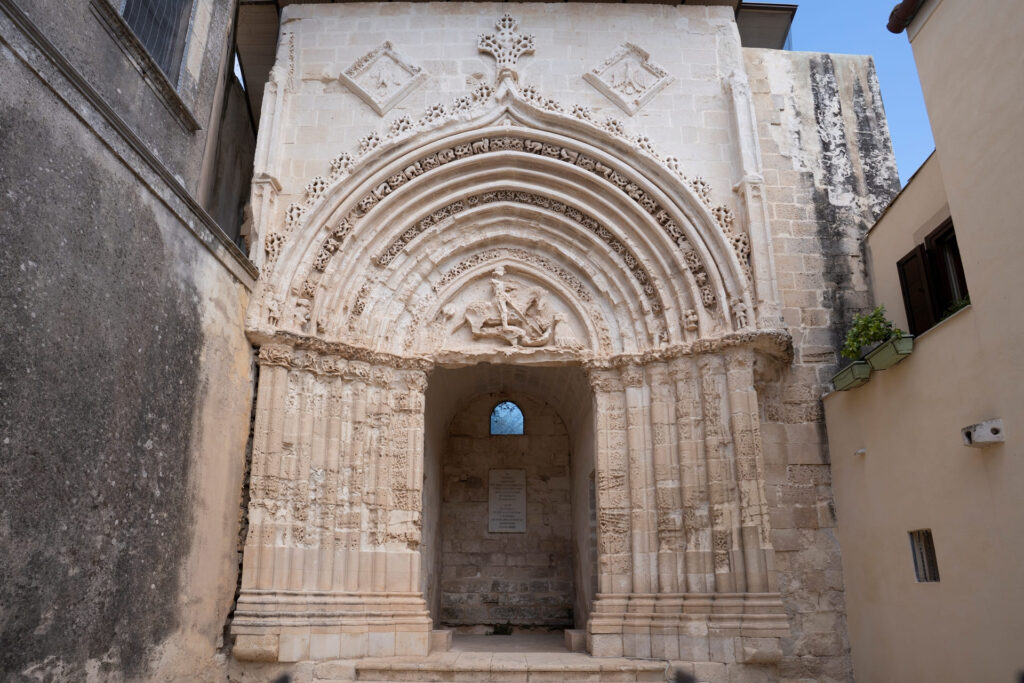
The Portal of San Giorgio in Ragusa Ibla is a fine example of Sicilian Baroque architecture dating from around 1349, although it reflects later interventions that enriched its decoration. Carved in stone with masterly craftsmanship, the portal is distinguished by its rich floral decorations, symbolic motifs and refined details, testifying to the high artistic level typical of Sicilian Baroque. Located in the heart of Ragusa’s historic centre, now a UNESCO World Heritage Site, this monumental entrance was part of an important building and represents an important historical, architectural and cultural landmark for the city. Today, the portal attracts tourists, scholars and art lovers, fascinated by its beauty and the cultural significance it embodies, a symbol of the rich Baroque tradition of the Iblei.

The Quarry Gonfalone

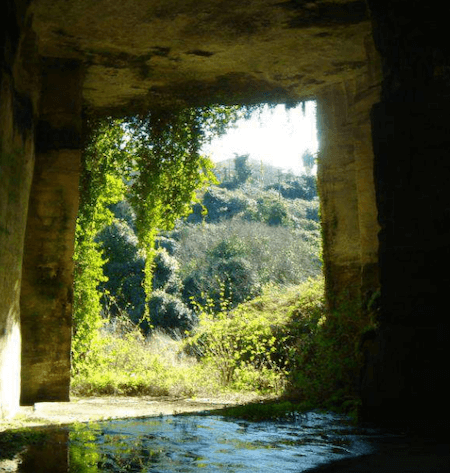
The Quarry Gonfalone is an ancient limestone quarry located in the Ragusa area that has played a fundamental role in the area’s building history, providing the material for the construction of local historic buildings, particularly in the charming historic centre of Ragusa Ibla. The site is distinguished by its imposing rock walls and large natural openings, immersed in the typical Mediterranean maquis vegetation that characterises the Hyblean landscape. Today, Cava Gonfalone is an important site of archaeological and natural interest, a favourite destination for hikers, scholars and history and geology enthusiasts who appreciate its cultural and environmental value. This site is a true heritage of the province of Ragusa, a symbol of human ingenuity and local building tradition, capable of telling the story of the city through stone and nature.

Marina di Ragusa

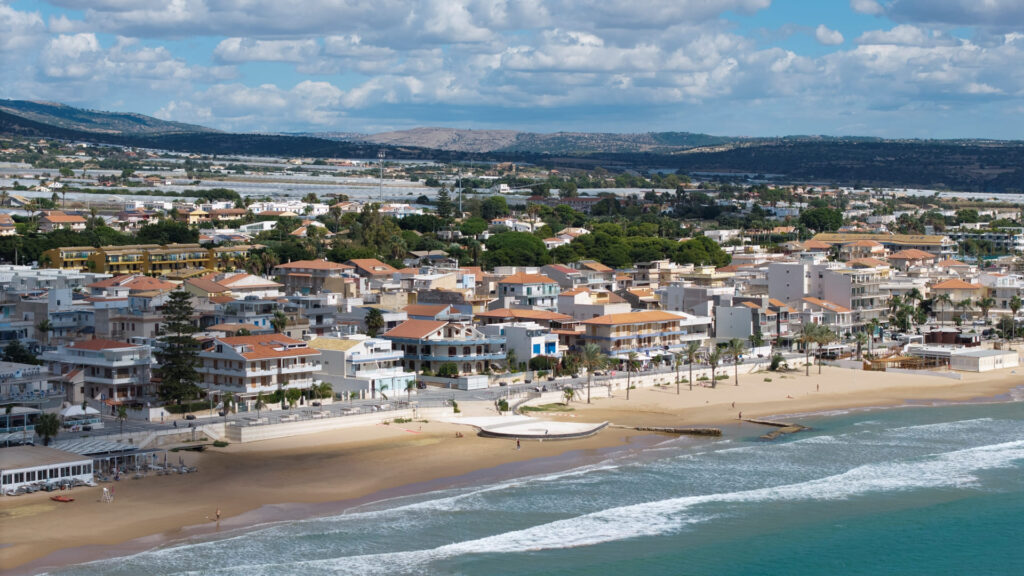
Marina di Ragusa is a lively seaside resort located along the coast of the municipality of Ragusa, famous for its wide sandy beaches and marina that attracts visitors from all over Sicily and beyond. A popular destination for tourists and residents alike, Marina di Ragusa offers a modern and well-equipped seafront promenade, full of services, typical restaurants, bars and quality accommodation facilities, perfect for summer stays. The locality has experienced significant development since the 1970s, becoming an important tourist centre, but also a cultural one, thanks to the events and manifestations that enliven the summer season. In addition to the natural beauty of the crystal-clear sea and beaches, the area retains traces of ancient settlements and preserves maritime traditions that tell the story and identity of the local community, making Marina di Ragusa a destination that combines fun, relaxation and culture.

The Macchia Forest of Irminio River Nature Reserve

The Macchia Forest of Irminio River Nature Reserve, established in 1985, covers about 410 hectares in the Ragusa territory, representing one of the most important natural environments in south-eastern Sicily. The reserve is characterised by dense Mediterranean scrub and downy oak forests, which offer shelter to various animal species, including birds of prey, reptiles and mammals. The Irminio River flows through this area, creating valuable wetlands that are fundamental to the local fauna and biodiversity. The site is accessible via equipped trails and viewpoints, ideal for hikers, naturalists and birdwatchers. The reserve is an important area dedicated to environmental conservation, sustainable tourism and ecological education, representing a true natural treasure in the heart of eastern Sicily, where nature and man coexist in harmony.

The Latomie of Ragusa

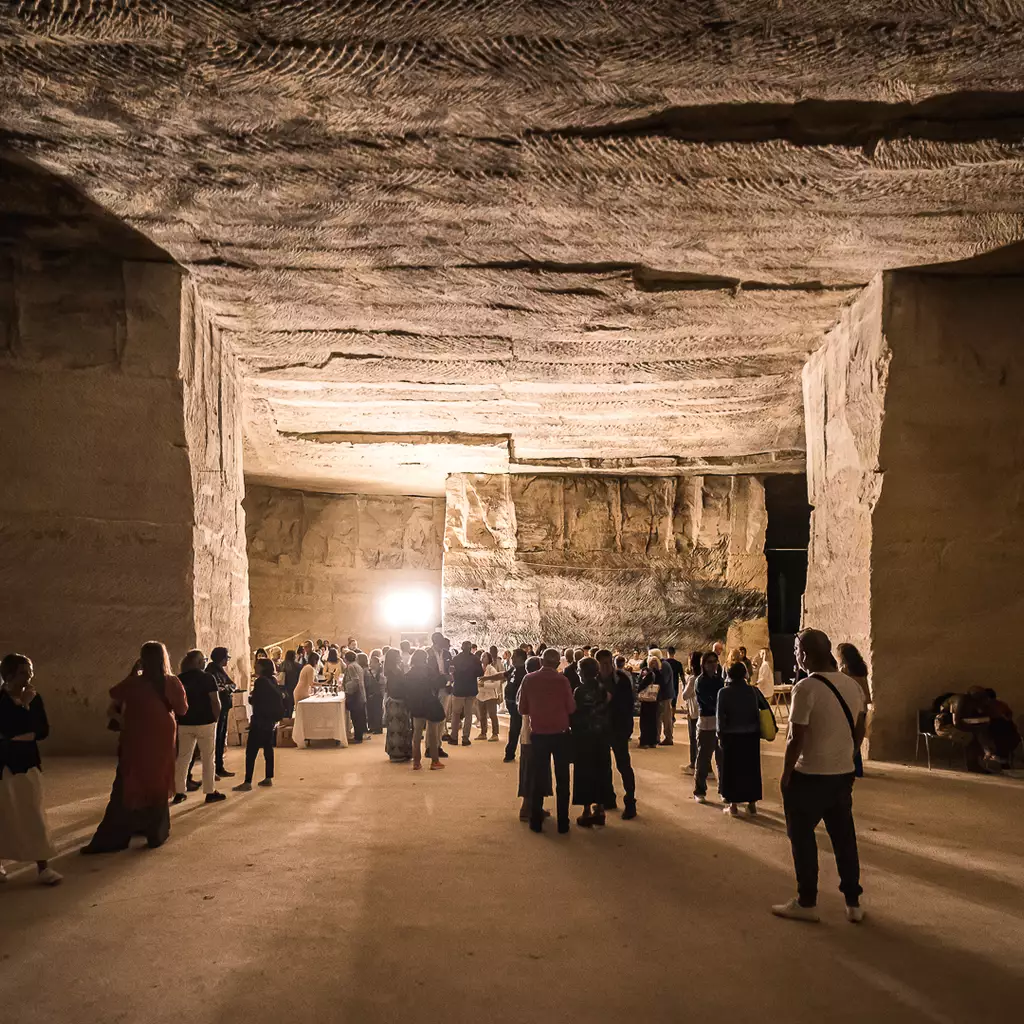
The Latomie of Ragusa are ancient limestone quarries, precious witnesses to the mining activity that took place after the 1693 earthquake. Located on the outskirts of the city, these rock-cut cavities have provided the fundamental material for the construction of the historical monuments, Baroque churches and traditional buildings that characterise the architectural landscape of the Hyblean territory. The latomie are distinguished by their vast underground tunnels and vertical walls, which reveal the skill and mastery of the ancient stonemasons in modelling the stone. In addition to their archaeological and historical value, they represent an important natural and cultural heritage, immersed in an environment of great charm. Today, the latomie are a site of tourist interest enhanced by guided tours detailing the history, the stone extraction techniques and the fundamental role these quarries have played in shaping local identity.

The Church of San Giorgio Vecchio

The Church of San Giorgio Vecchio stood at the eastern end of Ragusa Ibla and is one of the oldest religious buildings in the city. Largely destroyed by the 1693 earthquake, today mainly the 15th-century portal, the only surviving element, and some of the walls of the side chapels and the presbytery remain visible. The site, located near the suggestive Hyblean Garden, has undergone major consolidation and archaeological excavations that have brought to light the original layout and foundations of the church. Today, the area can be freely visited, enriched by explanatory panels that guide visitors to discover the history and medieval architecture of Ragusa and its territory. The pedestrian path around the site offers a fascinating insight into the thousand-year history of the city, enhancing this important cultural and religious heritage. The Church of San Giorgio Vecchio thus represents a symbol of the historical continuity and collective memory of the Ragusa community.